[et_pb_section fb_built=”1″ _builder_version=”4.9.7″ _module_preset=”default”][et_pb_row _builder_version=”4.9.7″ _module_preset=”default”][et_pb_column _builder_version=”4.9.7″ _module_preset=”default” type=”4_4″][et_pb_text _builder_version=”4.9.7″ _module_preset=”default” hover_enabled=”0″ sticky_enabled=”0″]
Augmented Reality (AR) might sound like a big, scary tech jargon, or even something out of a sci-fi flick, but it’s already a part of our everyday lives. Chances are, you’ve used it. Ever played Pokémon Go? Or tried on makeup virtually? That’s AR in action.
Examples of augmented reality in daily life surround us, and its impact goes far beyond that. AR is shaping entire industries, ranging from entertainment to healthcare.
Stay with us as we break down how AR works and explore what’s next for this game-changing technology.
What Exactly Is Augmented Reality?
Think of AR as a digital upgrade to your surroundings. Unlike Virtual Reality (VR), which puts you in a completely digital environment, AR keeps you grounded in the real world while layering extra digital details on top. It’s like adding a filter to your surroundings; but instead of just changing colors, it can add interactive 3D objects, information, and animations.
How Does AR Work?
[/et_pb_text][et_pb_image _builder_version=”4.9.7″ _module_preset=”default” title_text=”Picture11″ src=”https://arvrguide.com/wp-content/uploads/2025/03/Picture11.png” hover_enabled=”0″ sticky_enabled=”0″][/et_pb_image][et_pb_text _builder_version=”4.9.7″ _module_preset=”default” hover_enabled=”0″ sticky_enabled=”0″]
You might be thinking, “Okay, but how does it know where to put these digital objects?” Great question! AR depends on a few clever tricks:
Motion Tracking
AR systems depend on motion tracking to determine the position of a device relative to its surroundings. In other words, your device must be able to sense its position within the environment. This is done using Simultaneous Localization and Mapping (SLAM).
Basically, your phone or headset scans the space around you. It recognizes distinct points (like a table corner or a doorframe) and tracks them as you move. This makes sure that digital objects don’t just float away when you turn your head.
Environmental Recognition
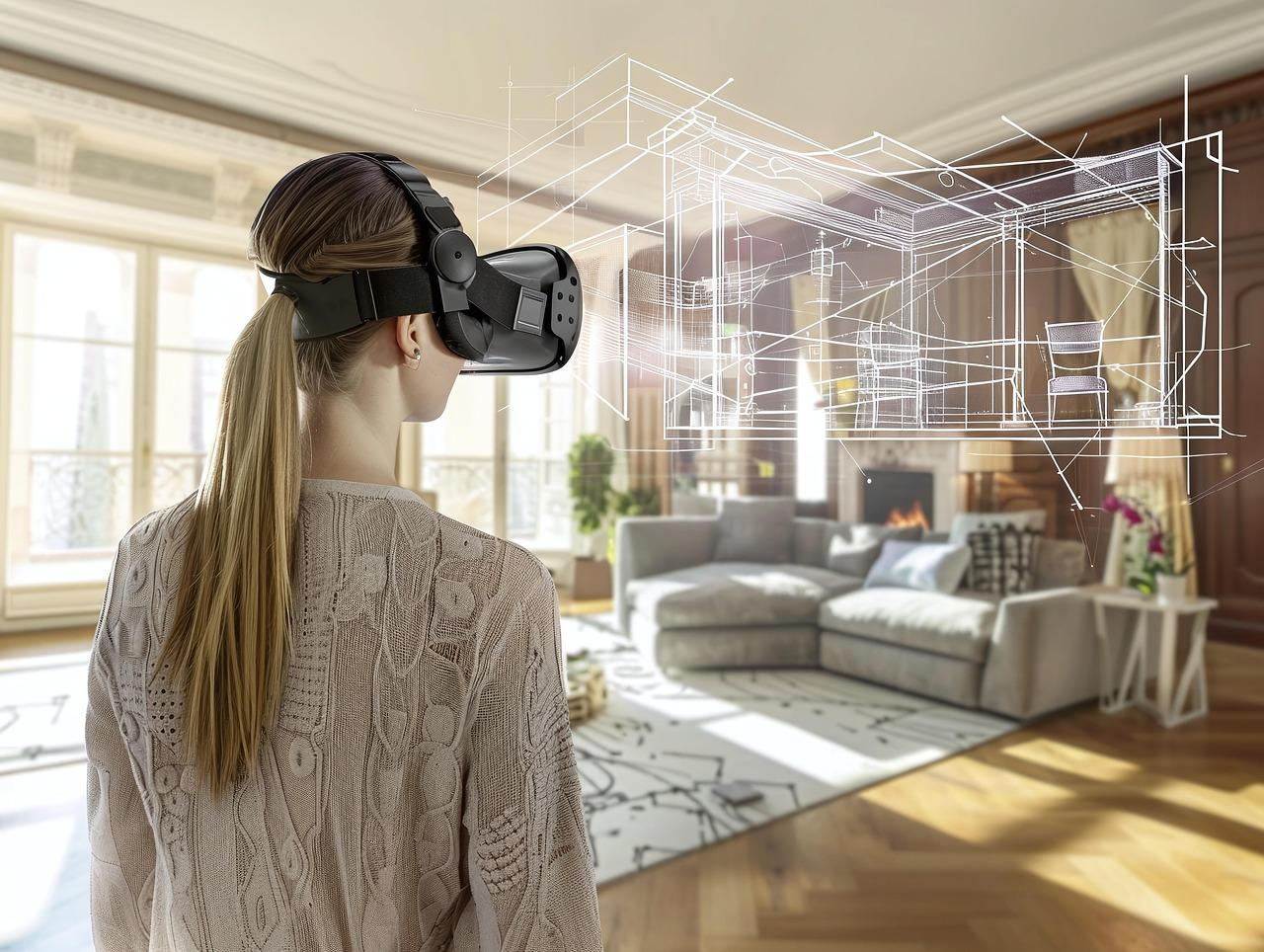
Ever tried an AR furniture app that lets you see a couch in your living room? That works because AR software detects flat surfaces—like floors and walls—so digital objects can “sit” on them just like real ones. This capability allows the development of applications like home design tools, where users can place virtual home decor to see how it fits within a space.
Light Adjustment
To keep things looking natural, AR apps adjust digital objects based on how light falls in your environment. Lighting conditions affect how digital content appears in real-world settings.
If you’re in a dimly lit room, AR-generated objects won’t look like they’re glowing in the dark (unless, of course, they’re meant to!). This adjustment makes digital elements appear more lifelike rather than artificial or out of place.
Depth Perception
For AR to feel realistic, digital objects need to understand the space they’re placed in. Depth mapping helps them understand where things are in relation to one another. This way, a virtual cat can hide behind your sofa instead of awkwardly floating in front of it.
Where is AR Making an Impact?
[/et_pb_text][et_pb_image _builder_version=”4.9.7″ _module_preset=”default” title_text=”Picture12″ src=”https://arvrguide.com/wp-content/uploads/2025/03/Picture12.png” hover_enabled=”0″ sticky_enabled=”0″][/et_pb_image][et_pb_text _builder_version=”4.9.7″ _module_preset=”default” hover_enabled=”0″ sticky_enabled=”0″]
AR isn’t just about fun filters and games—though those are pretty cool. It’s making an impact across industries in ways that might surprise you.
Entertainment and Gaming
The gaming industry was among the first to showcase AR’s potential. Titles like Pokémon Go introduced millions of users to the idea of interacting with digital creatures in real-world settings. But beyond games, AR is also changing live concerts, sports broadcasts, and interactive storytelling, making entertainment more immersive than ever.
Education and Training
Learning through AR is like having a supercharged textbook. Students can walk through historical events in 3D, medical trainees can practice procedures without real patients, and engineers can visualize intricate machinery before they build it. AR technology in education has the potential to make learning more interactive, engaging, and immersive.
Healthcare
[/et_pb_text][et_pb_image _builder_version=”4.9.7″ _module_preset=”default” title_text=”Picture13″ src=”https://arvrguide.com/wp-content/uploads/2025/03/Picture13.png” hover_enabled=”0″ sticky_enabled=”0″][/et_pb_image][et_pb_text _builder_version=”4.9.7″ _module_preset=”default” hover_enabled=”0″ sticky_enabled=”0″]
Doctors and surgeons are using AR to get a clearer view of the human body before making critical decisions. Surgeons can overlay digital imaging onto a patient’s body to guide procedures with precision. AR-assisted rehabilitation programs are also helping patients recover from injuries by gamifying physical therapy exercises.
Retail and E-Commerce
Ever wished you could try on clothes without stepping into a dressing room? AR-powered virtual try-ons let you do just that. Augmented reality apps like Zara’s AR feature and ASOS’s virtual try-on will allow you to see how clothes will fit. AR is also helping shoppers preview furniture, makeup, and even haircuts before making a commitment.
Manufacturing and Design
Imagine building a car or an airplane with an AR blueprint projected in front of you. That’s already happening! In industrial settings, AR aids in prototyping and assembly by overlaying instructions directly onto machinery. This helps designers and engineers test concepts in real time without having to create physical prototypes.
What’s Next for AR?
[/et_pb_text][et_pb_image _builder_version=”4.9.7″ _module_preset=”default” title_text=”Picture14″ src=”https://arvrguide.com/wp-content/uploads/2025/03/Picture14.png” hover_enabled=”0″ sticky_enabled=”0″][/et_pb_image][et_pb_text _builder_version=”4.9.7″ _module_preset=”default” hover_enabled=”0″ sticky_enabled=”0″]
Smarter Hardware
Leading tech companies are investing billions into AR-focused hardware. Meta alone is expected to help push total investments to nearly $100 billion by the end of 2025. Lightweight augmented reality (AR) glasses are expected to replace bulky headsets, making AR more practical for everyday use.
Innovations in display technology, such as microLED and waveguide optics, are improving clarity and reducing energy consumption, bringing AR closer to mainstream adoption. This means that these devices could soon be as common as smartphones.
Artificial Intelligence Integration (AI Meets AR)
Artificial Intelligence (AI) is making AR smarter. With AI-powered object recognition, AR can understand what it’s looking at and provide useful details instantly. For example, AI-enhanced AR can identify objects and provide instant contextual information, such as restaurant reviews displayed over a building’s facade.
Web-Based AR
Right now, most AR experiences require apps, but that’s changing very quickly. WebAR allows users to access AR content directly from a web browser, making it easier than ever to engage with digital content. This shift is particularly useful for marketing, where brands can engage consumers with interactive content without requiring app downloads.
Spatial Computing
AR is becoming part of something bigger: spatial computing. In simple terms, this means blending digital and physical spaces to create interactive environments. Picture a workspace where your “computer screen” is a floating, holographic screen instead of a traditional monitor.
What Challenges and Limitations Does AR Still Face?
[/et_pb_text][et_pb_image _builder_version=”4.9.7″ _module_preset=”default” title_text=”Picture15″ src=”https://arvrguide.com/wp-content/uploads/2025/03/Picture15.png” hover_enabled=”0″ sticky_enabled=”0″][/et_pb_image][et_pb_text _builder_version=”4.9.7″ _module_preset=”default” hover_enabled=”0″ sticky_enabled=”0″]
Privacy Concerns
Because AR devices collect data about the real world, privacy is a big issue. Who owns the data these devices capture? How can users control what’s being recorded? These are questions that need clear answers as AR becomes more widespread.
Technical Hiccups
Despite rapid advancements, AR still faces challenges in rendering digital content with complete accuracy. It struggles with detecting its environments, such as tricky lighting conditions and fast-moving objects. While the technology is improving, there’s still work to be done to make it reliable in all environments.
Adoption and Accessibility
High-quality AR hardware is expensive, which limits how many people can use it. For AR to truly take off, it needs to be more affordable and accessible to everyday users. Plus, the technology must demonstrate everyday applications to attract broader audiences beyond niche markets.
Wrapping It Up
AR is here, and it’s only getting better. Whether you’re playing games, shopping, learning, or working, AR is carving out a place for itself in our daily lives in ways that once seemed impossible. Sure, there are hurdles, but with rapid advancements, it won’t be long before AR becomes as common as smartphones.
So if you’ve ever wondered whether AR is just a passing trend, think again—this tech is only just getting started.
Want to learn more about how augmented reality works? Explore our guides and expert insights at ARVR Guide and stay ahead in the immersive tech revolution.
[/et_pb_text][/et_pb_column][/et_pb_row][/et_pb_section]