[et_pb_section fb_built=”1″ _builder_version=”4.9.7″ _module_preset=”default”][et_pb_row _builder_version=”4.9.7″ _module_preset=”default”][et_pb_column type=”4_4″ _builder_version=”4.9.7″ _module_preset=”default”][et_pb_text _builder_version=”4.9.7″ _module_preset=”default”]
Remember when “The Matrix” felt like pure science fiction? Fast-forward to today, and while we’re not dodging bullets in slow motion, the concept of immersive digital worlds is no longer a fantasy.
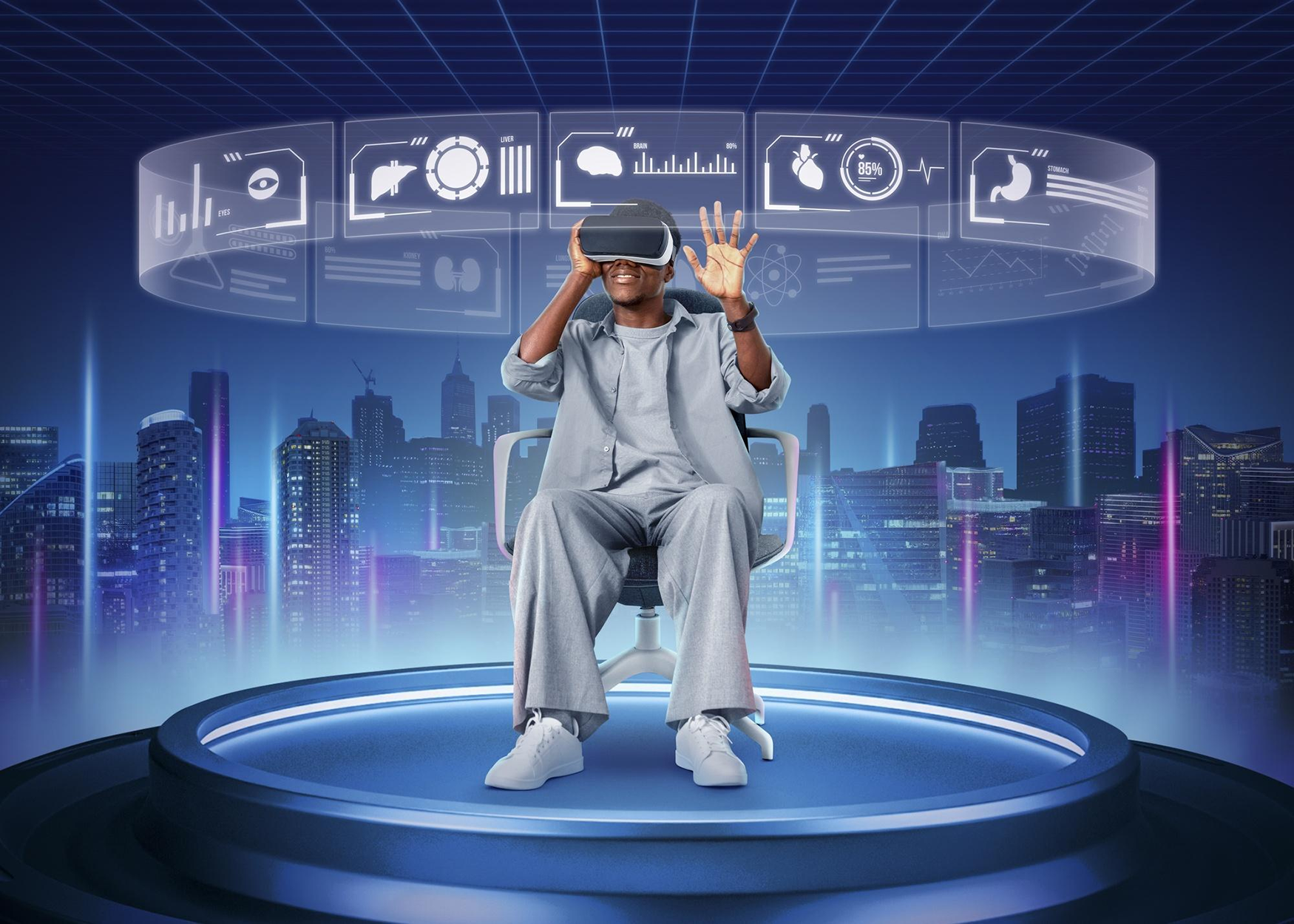
Enter the metaverse—a connected virtual space that blends digital and physical realities. But where do augmented reality (AR) and virtual reality (VR) fit into this rapidly developing digital universe? Let’s take a closer look.
AR vs. VR
Before getting into how these technologies shape the metaverse, here’s a quick rundown:
- Virtual Reality (VR):VR creates fully immersive digital environments. Put on a headset, and you’re transported to a computer-generated world where you can interact with objects and people as if they were real. Whether it’s exploring distant planets, training for a job, or attending a concert, VR makes it possible.
- Augmented Reality (AR):AR overlays digital elements onto the real world. Think of apps like “Pokémon GO,” where digital characters appear in real-life surroundings. AR blends virtual components with physical spaces, from interactive shopping experiences to real-time navigation assistance.
Both technologies serve as the foundation for the metaverse, bridging the gap between digital interactions and everyday life.
The Digital Spaces of the Metaverse
[/et_pb_text][et_pb_image src=”https://arvrguide.com/wp-content/uploads/2025/03/Picture1.png” title_text=”Picture1″ _builder_version=”4.9.7″ _module_preset=”default”][/et_pb_image][et_pb_text _builder_version=”4.9.7″ _module_preset=”default”]
Metaverse technology isn’t confined to a single platform. It’s an interconnected network of virtual spaces, and AR and VR are driving its expansion in multiple ways:
1. Immersive Digital Spaces
VR allows users to engage in experiences that go far beyond a flat screen. Whether it’s exploring ancient civilizations, attending live-streamed concerts, or visiting digital museums, VR makes the impossible tangible. Meanwhile, AR integrates interactive elements into real-world surroundings, such as home design previews and guided city tours.
2. Social Connectivity
AR and VR are reshaping how people connect. Imagine sitting in a digital cafe with friends, where body language and facial expressions are fully visible through VR avatars. Businesses are adopting VR meetings to replicate in-person interactions, while AR-powered communication tools add real-time data to conversations.
3. Virtual Marketplaces
Users can purchase digital clothing for metaverse avatars, acquire virtual properties, and trade rare digital assets, all within these immersive environments. The expansion of blockchain technology has given rise to secure transactions, allowing digital items to hold tangible value.
4. Entertainment Evolution
Movies, concerts, and theater performances are stepping into new territory. Instead of watching on a screen, audiences can experience performances as if they were physically present. Music festivals are already experimenting with VR to create fully interactive shows.
5. Training and Simulation
Many industries, from aviation to medicine, have integrated AR and VR for training. Pilots practice in hyper-realistic simulators, while surgeons refine their techniques through VR-guided procedures. This not only reduces risks but also provides hands-on learning opportunities that were previously impossible.
The Future of Social Interactions
[/et_pb_text][et_pb_image src=”https://arvrguide.com/wp-content/uploads/2025/03/Picture2.png” title_text=”Picture2″ _builder_version=”4.9.7″ _module_preset=”default”][/et_pb_image][et_pb_text _builder_version=”4.9.7″ _module_preset=”default”]
Gone are the days when digital communication was limited to text-based messages and video calls. AR and VR are revolutionizing human interaction by introducing a sense of physical presence in digital conversations:
a. Virtual Gatherings
Platforms such as VRChat and Meta’s Horizon Worlds provide social spaces where people can interact naturally. Attending a birthday party or a business meeting in VR feels remarkably real compared to traditional online interactions.
b. Shared Experiences
Watching a movie in a virtual theater, playing metaverse games in a shared environment, or even taking part in an art exhibit alongside others makes digital interactions feel more engaging and lifelike. AR extends this idea into real-world settings, allowing users to collaborate on projects by adding digital layers to physical spaces.
c. Avatars and Personalization
Users can design digital versions of themselves, complete with unique outfits, hairstyles, and expressions. With advancements in facial tracking and AI, these avatars are becoming more lifelike, capturing real emotions and movements.
The Evolution of the Digital Economy
[/et_pb_text][et_pb_image src=”https://arvrguide.com/wp-content/uploads/2025/03/Picture3.png” title_text=”Picture3″ _builder_version=”4.9.7″ _module_preset=”default”][/et_pb_image][et_pb_text _builder_version=”4.9.7″ _module_preset=”default”]
The metaverse isn’t just a space for socializing—it’s also reshaping the economy. Virtual marketplaces are thriving, fueled by AR, VR, and blockchain technologies.
1. Digital Property and Fashion
Just like buying a house or clothes in the real world, people are now buying and selling digital land and virtual clothes for their avatars. Imagine shopping for a stylish look in a game, but now you truly own that style and can show it off in the virtual world.
2. Blockchain and NFTs
For those who are not already aware of blockchain, think of it as a secure, unbreakable notebook that tracks every transaction. And NFTs are one-of-a-kind digital assets, like rare trading cards or art. When you buy a digital item, like a metaverse NFT, it’s yours, just like owning a collectible or a famous painting in the physical world.
3. Employment in Virtual Spaces
As the metaverse expands, new job opportunities are emerging. Virtual architects, digital fashion designers, and VR event coordinators are just some of the professions gaining traction.
Facebook’s Metaverse and Other Digital Platforms
Tech giants are investing heavily in shaping the metaverse, with Facebook (now Meta) leading the charge. An example of the metaverse is Meta’s Horizon Worlds, an ambitious attempt to create a fully interactive digital space where users can socialize, work, and play.
The metaverse company is also developing VR hardware such as the Meta Quest series to make these experiences more accessible.
Other platforms contributing to this digital shift include:
- Decentraland:A blockchain-based metaverse where users can purchase virtual real estate, attend events, and interact in a decentralized world.
- The Sandbox:A virtual space driven by user-generated content, offering tools for building games, experiences, and digital assets.
- Microsoft Mesh:A mixed-reality platform designed for collaboration, enabling remote workers to meet in shared 3D environments.
- Roblox and Fortnite:While primarily gaming platforms, these worlds are evolving into expansive social and creative hubs where brands host virtual events and concerts.
These platforms demonstrate that the metaverse isn’t owned by a single company—it’s a growing ecosystem of virtual spaces, each with its own distinctive approach.
Challenges and Considerations
[/et_pb_text][et_pb_image src=”https://arvrguide.com/wp-content/uploads/2025/03/Picture4.png” title_text=”Picture4″ _builder_version=”4.9.7″ _module_preset=”default”][/et_pb_image][et_pb_text _builder_version=”4.9.7″ _module_preset=”default”]
Despite its promise, the metaverse faces several challenges that need to be addressed:
- Privacy and Security:As digital spaces become more immersive, protecting user data becomes increasingly important. Companies must develop strict security measures to prevent breaches and misuse of personal information.
- Accessibility:Widespread adoption depends on making AR and VR hardware more affordable and user-friendly. Lowering the cost barrier will allow more people to participate in digital environments.
- Interoperability:For the metaverse to function as a cohesive ecosystem, different platforms must work together. To make this happen, they’ll need to agree on common technologies across companies and industries, making the experience feel integrated for everyone.
- Ethical Design:The psychological impact of extended time in virtual spaces must be considered. Developers must prioritize responsibledesign choices that prevent digital addiction and social isolation.
Closing Remarks
As we step into the future with AR and VR, no single company will dictate the metaverse’s evolution. Instead, it will be shaped by a mix of corporate investments, open-source contributions, and community-driven projects.
AR and VR are catalysts reshaping how people work, learn, and connect. So put on your headset, fire up that metaverse app, and step into the next era of digital interaction. The possibilities are expanding faster than ever, and we’re only scratching the surface of what’s to come.
Eager to explore more about the metaverse? Check out our guides at ARVR Guide for expert insights and get all the info you need to stay ahead in immersive tech.
[/et_pb_text][/et_pb_column][/et_pb_row][/et_pb_section]