Disclosure: arvrguide.com may earn a commission if you buy through links on this page, at no extra cost to you. We only recommend gear we’d buy with our own money.
XREAL One Review (2026): The Screen You Wear Finally Gets a Brain
Where to buy the XREAL One: Get the XREAL One on Amazon ($399), or direct from XREAL’s own store.

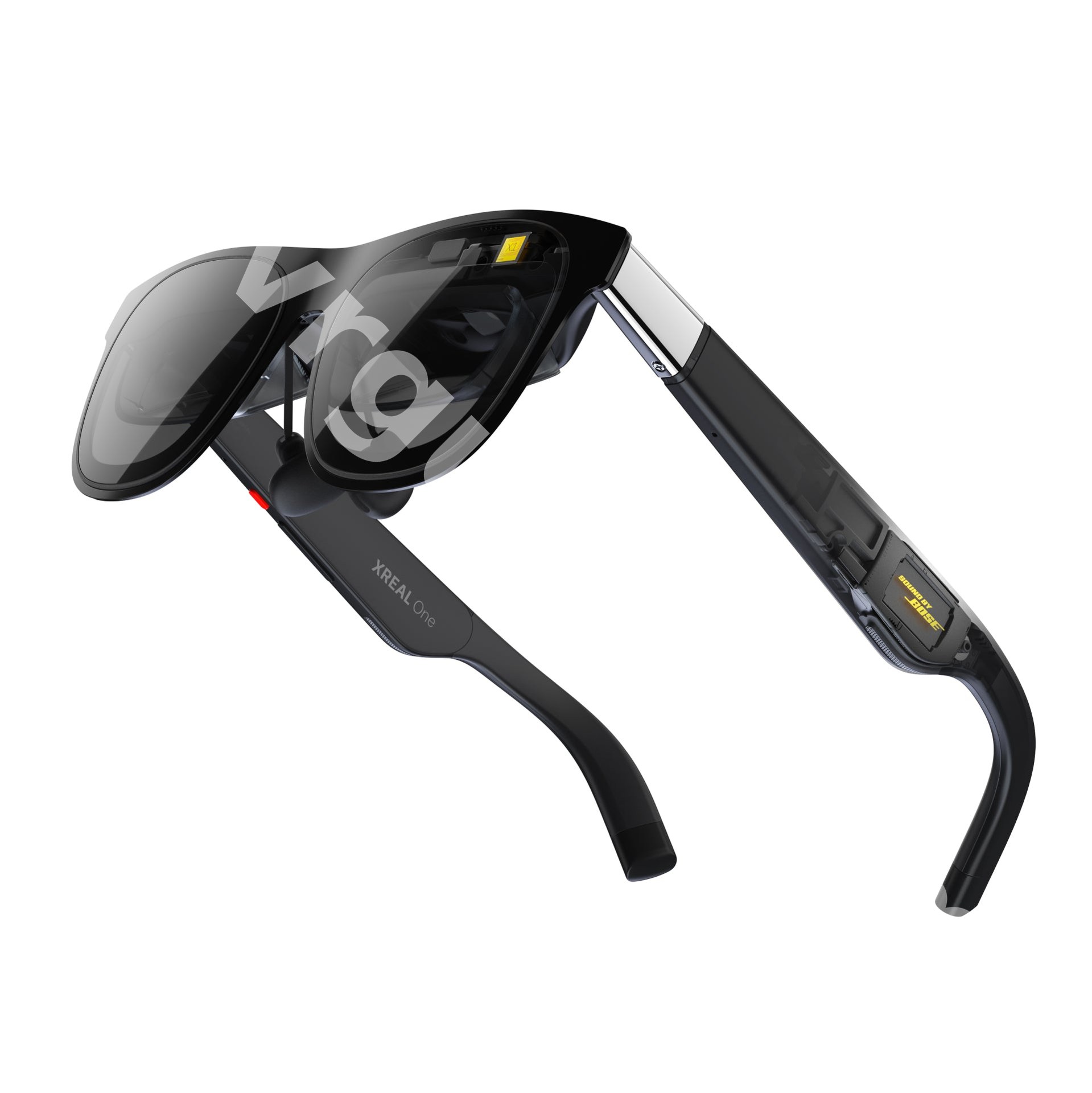
XREAL One is the first pair of AR glasses XREAL built around its own chip, and that single change matters more than the spec sheet suggests. Every XREAL pair before this one, including the Air 2 line below it in price, leaned on the phone or laptop at the other end of the cable to keep the picture steady. The One carries a chip XREAL calls X1 inside the frame, and the X1 holds the virtual screen in place when you move your head. You plug into any USB-C device that sends video over the cable and the screen stays put instead of swimming with every step. That is the whole pitch, and after living with the Air 2 line’s drift, it is the reason the One exists.
The rest of the hardware is a steady step up, not a leap. Each eye gets a 1920 by 1080 micro-OLED panel behind birdbath optics, which combines into a 32:9 ultrawide picture that reads like a 330-inch screen floating across the room. The field of view is 50 degrees, up from 46 on the Air 2 line, brightness tops out at 600 nits, and the panels run at 120Hz with a measured motion-to-photon delay around 3 milliseconds. The frame weighs 84 grams, a few more than the Air 2’s 72, and the extra weight buys an adjustable interpupillary distance dial and diopter dials, so two people with different eyes can share one pair without prescription inserts. Sound comes from open-ear speakers tuned with Bose, noticeably fuller than the tinny pair on the Air 2, and less leaky if you keep the volume sane.
What the One cannot do matters as much as what it can. There is no camera, no hand tracking and no app store on the glasses. Nothing installs on them. They are a display, anchored in space by the X1, fed over USB-C by a phone, a laptop, a Steam Deck or a console dock. The phone’s battery pays for the picture, and heavy video days will drain a flagship phone faster than owners expect. If you want spatial apps, games that exist around you or a camera, the One is the wrong product, and a Quest 3 or the best Meta Quest 3 games list is the better spend. If you want a huge private screen for flights, train rides, hotel desks and couch work sessions, nothing else in this price class anchors as steadily.
Against its own siblings, the choice is simpler than XREAL’s lineup makes it look. The XREAL One Pro at $599 widens the field of view to 57 degrees and brightens the panels to 700 nits, and both matter most for outdoor use and dense text work. The XREAL Air 2 Pro at $249 keeps the same 46-degree optics as the plain Air 2 but adds electrochromic dimming, which we cover in its own review. The One splits the difference: 50 degrees, 600 nits, built-in anchoring, $399. For most buyers who want the anchoring without the Pro price, the One is the model to get, and XREAL’s own awards shelf agrees, with a TIME Best Inventions nod for the X1 chip.
The verdict: the XREAL One is the first XREAL we would hand to someone who has never owned screen glasses, because the picture stays where you put it and that is the thing that made earlier pairs feel like a science project. Buy it for travel and work, not for gaming, keep a power bank in the bag, and it earns its $399.
FAQ
Is the XREAL One worth $399?
If anchoring without the Pro price is what you want, yes. The X1 chip holds the screen steady, which the $199 Air 2 cannot do without the Beam Pro box.
Does the XREAL One work with iPhone?
Yes, over USB-C, with the same plug-and-play mirroring as Android and Mac. Features that need extra bandwidth can vary by phone.
Can you wear the XREAL One with prescription glasses?
Not over glasses, but the One carries diopter dials for mild corrections, and XREAL sells prescription lens inserts for stronger ones.
Every XREAL model, one list
If you are trying to place the whole XREAL lineup in one spot, here is every model we have reviewed: the XREAL One Pro is the big-screen flagship at $599, the XREAL 1S is last year’s screen with the sharpest picture per dollar at $449, the XREAL AURA is the widescreen 70-degree Android XR option at $1,099, sold only through XREAL’s own store and not on Amazon, and the XREAL One at $399, the XREAL Air 2 Pro at $249 and the XREAL Air 2 at $199 are the lighter pairs that came before and after the 2023 line. The XREAL Beam Pro is the Android companion box that adds apps, a battery and spatial anchoring to any of them.
More in this topic: XREAL One Pro Review: $599 AR Glasses Worth It?, XREAL Air 2 Review (2026): The Cheapest XREAL Worth Buying