Disclosure: this article contains affiliate links. If you buy through them, we may earn a small commission at no extra cost to you. Prices checked November 2026.
Quick pick: the accessories that earn their shelf space
| Accessory | Price range | Priority | One-liner |
|---|---|---|---|
| Battery head strap | $60-$100 | Buy first | Doubles your play time and fixes the fit |
| Controller grips | $15-$30 | Buy first | Never chase a flying controller again |
| Silicone face pad | $20-$35 | Second | Saves the stock foam and stops the face sweat |
| Lens protectors | $10-$20 | Second | Cheapest insurance you will ever buy |
| Carrying case | $30-$60 | If you travel | The whole rig in one zip |
| Link cable | $15-$25 | For PC VR | A six meter cable beats the two meter stock one |
| Charging dock | $30-$50 | Nice to have | Headset and controllers charged without thinking |
Start with the strap, not the games
Here’s the truth nobody puts on the box: the stock strap is the weakest part of an otherwise great headset. It holds the front of the rig fine, but the back rides high, so the front-heavy feel creeps in around the twenty minute mark. A good aftermarket strap moves the balance point back and adds a battery, and the difference is not subtle.
The battery strap changed my sessions
My pick is the KIWI H4 Boost, about eighty dollars. It’s a halo design, so it sits on top of your head instead of pressing on your face, which is where most of the comfort gain comes from. The battery is a real 5,300mAh pack that charges at 45W and adds hours, not minutes. Full review with the long-term notes is already on the site.
Controller grips: fifteen dollars of insurance
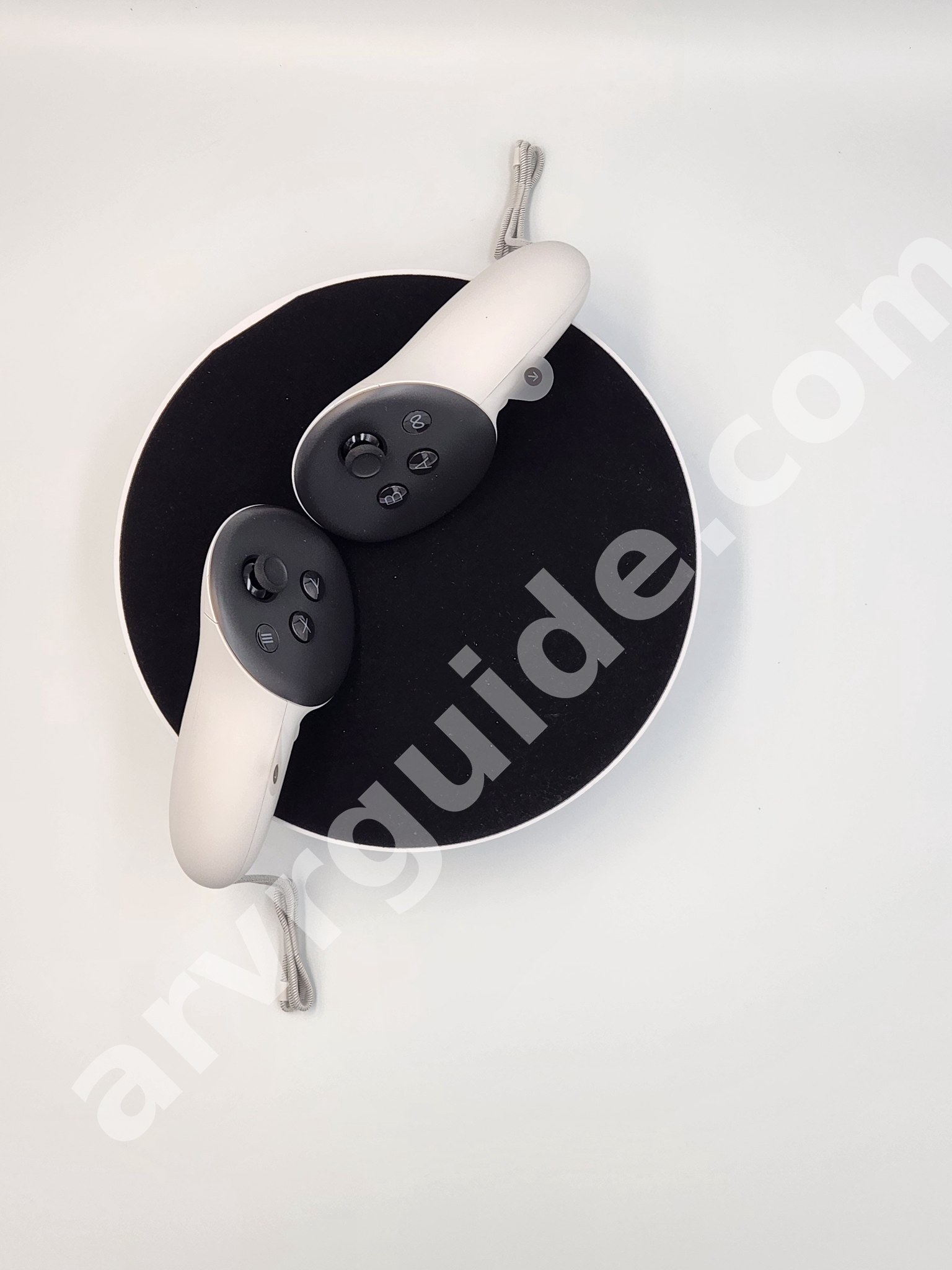
The Touch Plus controllers are comfortable, but smooth plastic plus quick wrist movements plus hardwood floors equals a scratched controller or a dented wall. Rubberized grips fix the slip and add knuckle straps so a hard swing can’t launch anything. This is the cheapest upgrade on the list and the one I’d buy on day one.
Silicone face pad and lens protectors
The stock foam pad soaks up exactly what you think it soaks up. A twenty dollar silicone pad wipes clean, lasts years, and stops the sweat sting during workouts. Lens protectors sit over the optics so your eyelashes and dust never touch them. Scratched lenses are not repairable, so this is the definition of cheap insurance. One fit note: the KIWI pad linked above is for the Quest 3; Quest 3S owners need the F4 version instead.
The case, the cable, the dock
A hard carrying case matters if the headset travels, which mine does. Get one sized for the strap you own, not the stock strap, or nothing fits.
For PC VR, the two meter stock Link cable is an exercise in standing very still. A third-party six meter cable costs about the same as lunch and lets you actually turn around.
A charging dock is the only nice-to-have here. It doesn’t improve play, it removes the ritual of plugging things in, and that turns out to matter: a charged headset gets used. If the headset sits in a drawer half dead, no accessory on this list will save your play time.
What not to buy
Skip no-name battery straps with mystery cells, cheap “lens wipes” that leave micro-scratches, and any accessory that promises to cool the headset with a fan clip. And skip the $200 aftermarket straps until you know you need their specific feature; the $80 class is where the value sits.
The bottom line
Strap first, grips second, face pad and lens protectors with whatever’s left. Under $150 total, the Quest 3 or 3S turns into a different, more comfortable headset, and every one of these picks has lived on my own setup, not on a spec sheet.
More in this topic: Meta Quest 3 Elite Strap: Battery or Standard? (2026), Meta Quest 3 Charging Dock: Compact or Full-Size? (2026)