Disclosure: arvrguide.com may earn a commission when you buy through links on this page. It never changes what we say about a product.
Rokid Max 2 review (2026): AR glasses with a built-in myopia dial
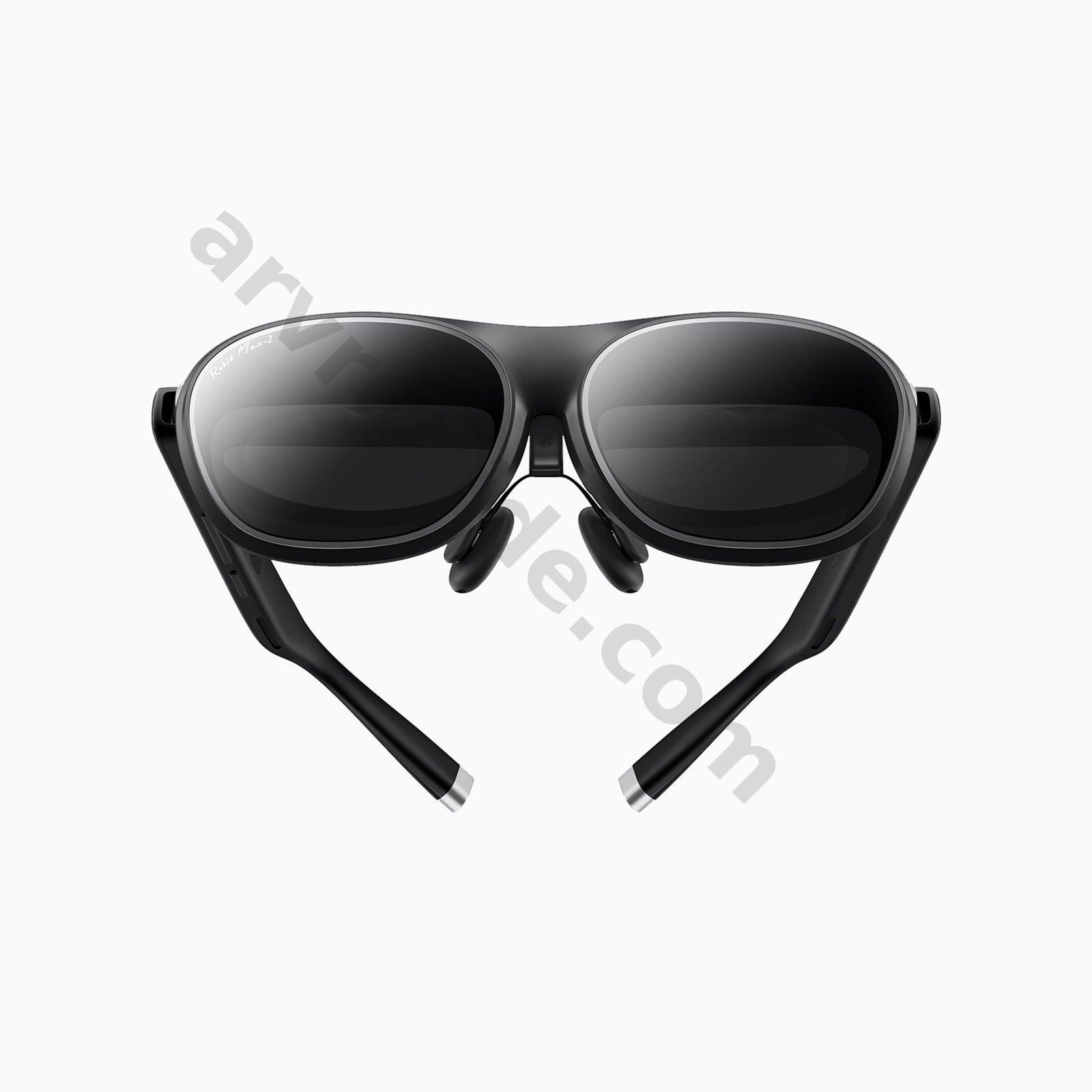
Most smart glasses make you choose: either order a separate pair of prescription lenses and wait for them to ship, or squint through a screen you can’t get into focus. Rokid took a different road with the Max 2. There are two small dials on top of the frame, one above each lens, and you turn them until the picture is sharp. That is the entire prescription system, and it covers 0.00D down to -6.00D, which reaches most nearsighted people.
The Max 2 is a plug-in pair. It has no battery, no processor and no camera of its own. You connect it to something that already makes a picture (a phone, a laptop, a tablet, a game console) and it shows that device’s output on a virtual 215-inch screen in front of you. At $259 it undercuts most of the display-glasses field while carrying specs that used to sit only on $400+ pairs: a micro-OLED screen, a 120Hz refresh rate and a claimed 3,000 nits of brightness.
Where to buy the Rokid Max 2: Rokid sells it direct for $259 on their own store, in silver or black.
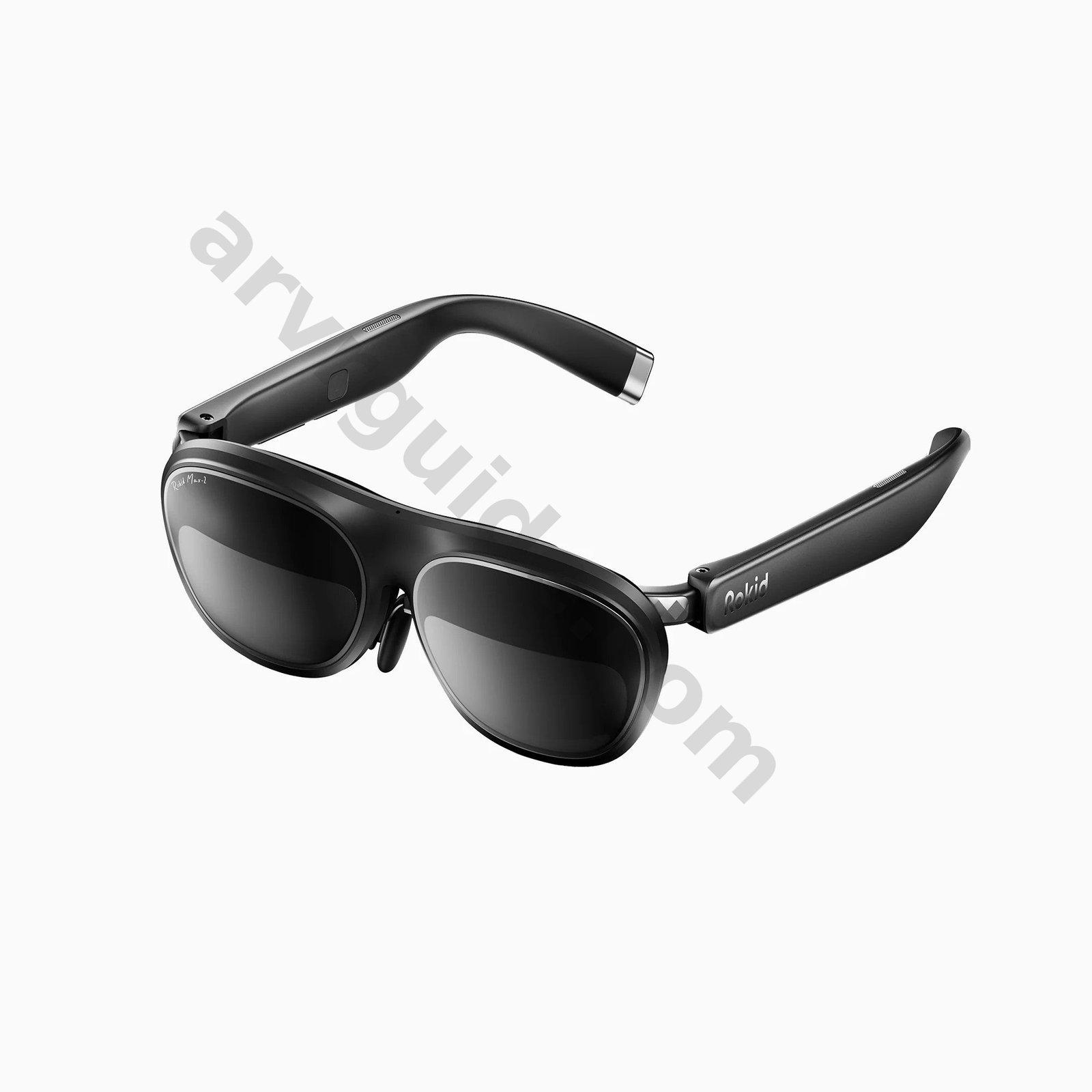
What the Rokid Max 2 actually is
Think of the Max 2 as a TV you wear. It is a display pair in the same lane as the XREAL One, not a camera-and-AI pair like Ray-Ban Meta or Rokid’s own Rokid Glasses. Nothing records, nothing listens for commands, and nothing runs apps. The frame holds two tiny OLED projectors that bounce the picture into your eyes, plus the dials, the speakers and the USB-C cable socket.
Because the computing happens in the device you plug in, the glasses stay light: 75 grams on your face, close to a normal pair of chunky sunglasses. That is also why they cost $259 instead of $500. You are paying for screens and optics, not a pocket computer.
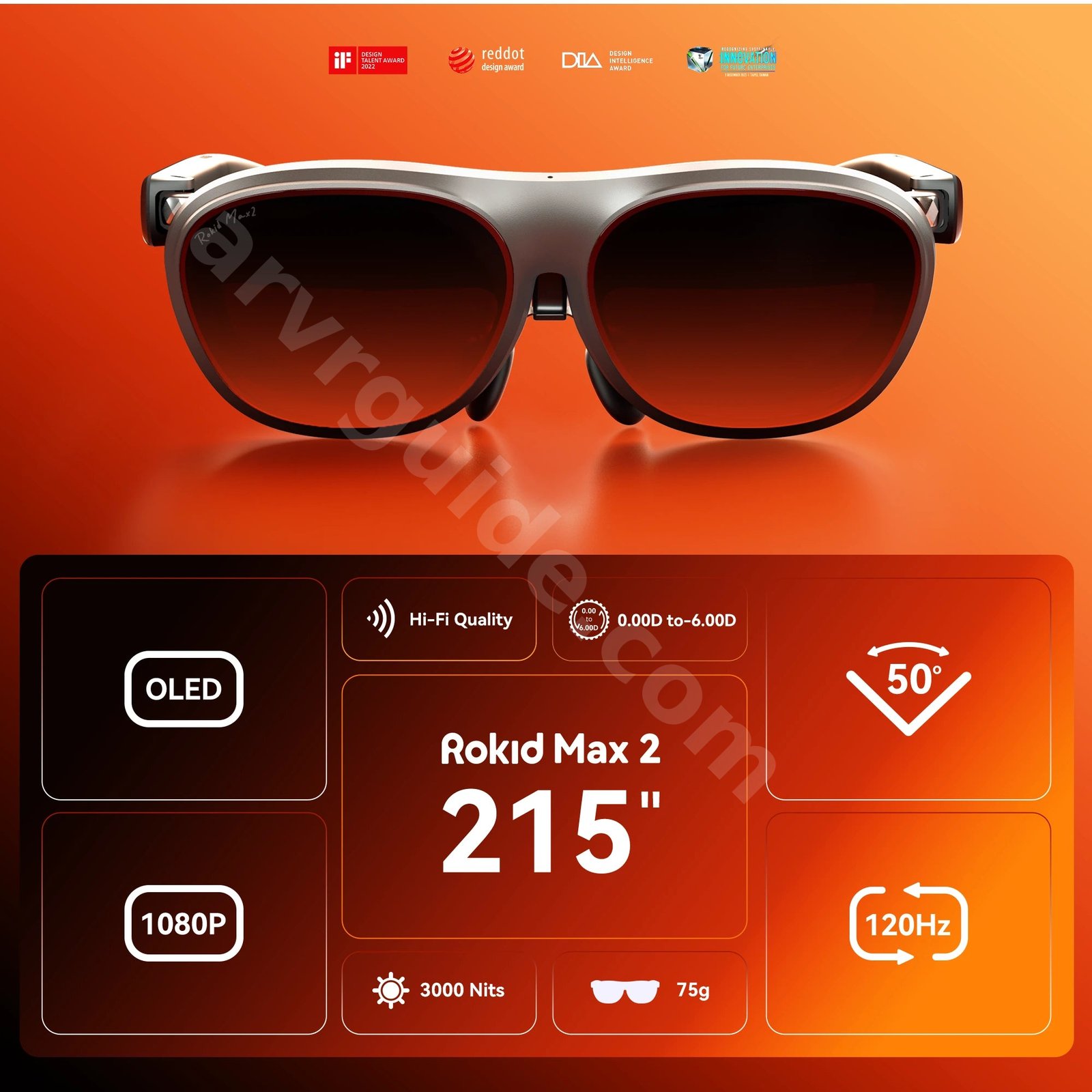
The myopia dials are the headline feature
Here is the part that makes the Max 2 different from almost everything else in this price bracket. Display glasses project the image a fixed distance from your eye, so if you are nearsighted, the picture blurs exactly the way a far-away movie screen does. Most brands fix that by selling magnetic prescription lens inserts, which means measuring your prescription, ordering the inserts, waiting a week and adding $50 to $150 to the bill.
Rokid skips all of that. Twist the dials on top and the optics move until the virtual screen lands in focus, the same way binoculars focus. The range runs from 0.00D (perfect vision, dial all the way out) to -6.00D (moderate-to-strong nearsightedness). If your prescription is stronger than -6.00D, or you have astigmatism that needs correcting, you would still need inserts or contacts. But for the everyday -1.00 to -4.00 crowd, the dials mean the glasses work out of the box with no extra cost and no waiting.
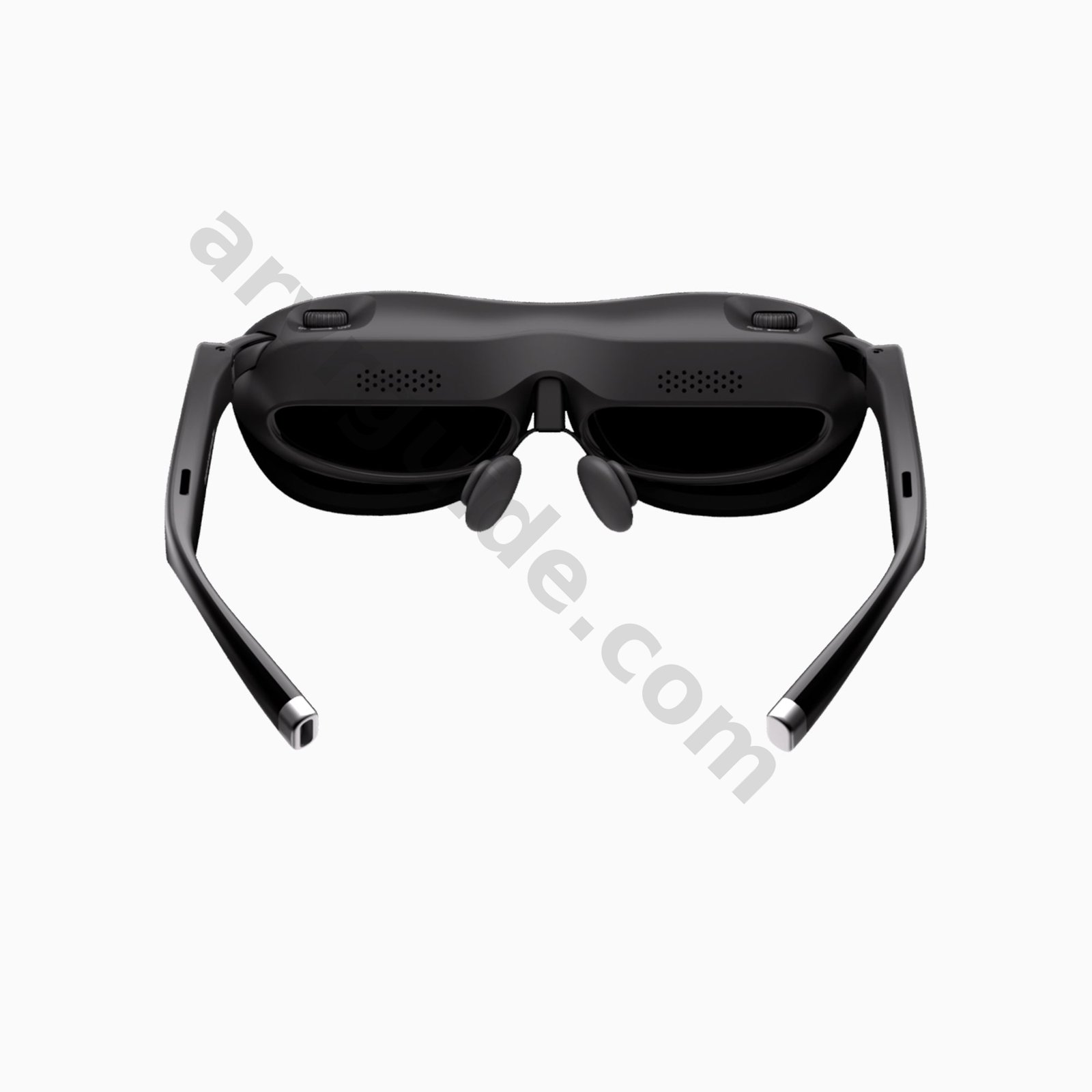
The screen: a 215-inch OLED picture
Rokid rates the virtual screen at 215 inches viewed from across a large room, roughly the size of a big projection wall. Under the hood it is a 1080p micro-OLED panel running at up to 120Hz, so fast games and scrolling text hold up without the smear you get on 60Hz panels. The claimed 3,000 nits of peak brightness matters more than the raw resolution: display glasses compete with daylight, and dimmer pairs wash out the moment you step outside.
The field of view is 50 degrees. In plain terms, the picture fills a wide chunk of your vision rather than a small floating window, which is why it reads as “big screen” instead of “phone screen in the corner.” The trade-off is normal for this class: you see the frame edges when you look hard to the side, and the picture sits in front of the real world, not mixed into it. This is not a true-AR overlay like a headset; it is a private cinema you carry.
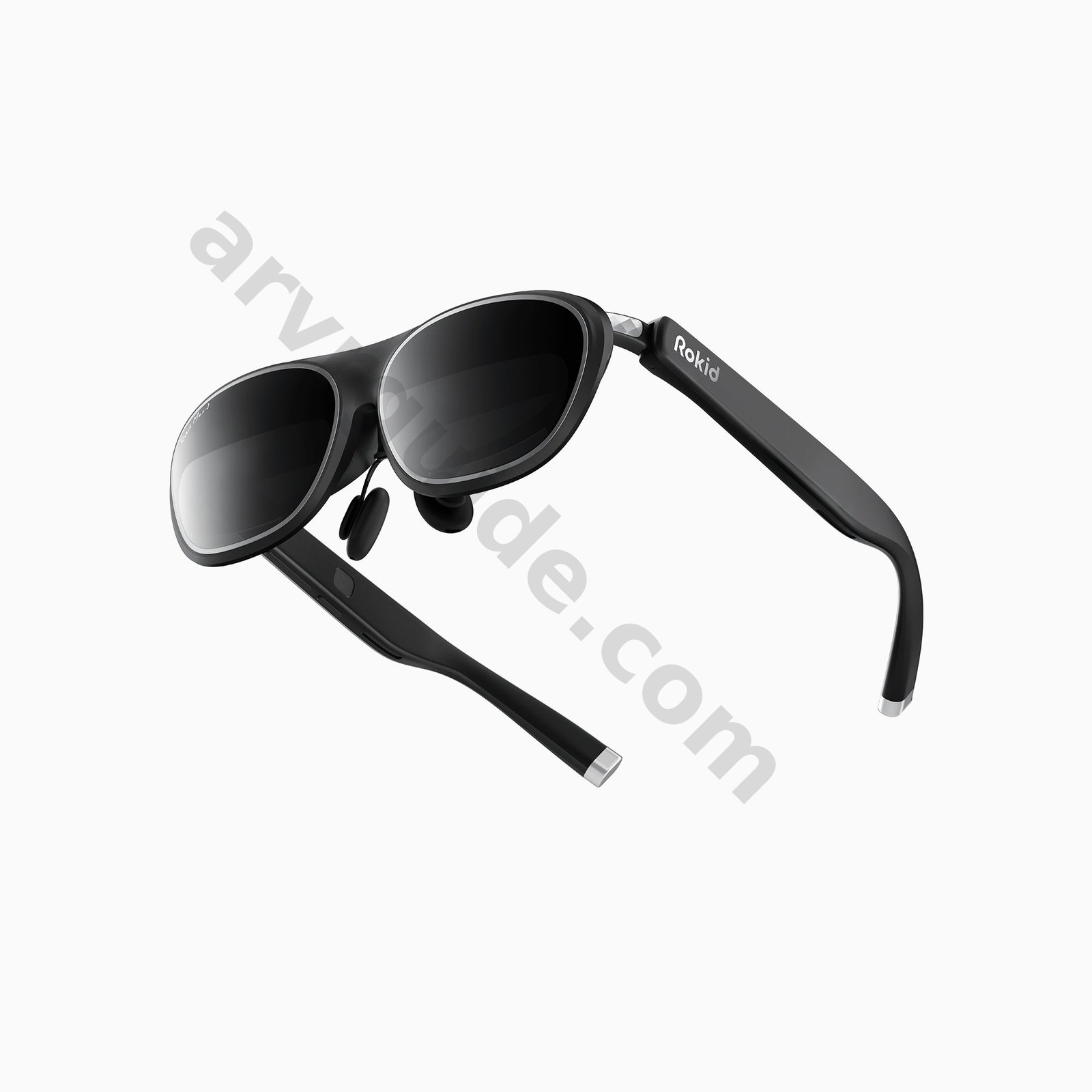
What you plug it into
Any device that pushes video over a single USB-C DisplayPort connection works: recent Android phones, laptops, tablets, Steam Deck, PlayStation, Xbox, iPhone 15 and newer. Plug in, pick your content, done. No apps, no pairing, no account.
If you want the glasses to work with nothing at all plugged in, Rokid sells the AR Spatial bundle at $429, which pairs the Max 2 with the Station 2, a small Android puck that runs apps, streams video and stores files, so the glasses become a self-contained screen. There is also an AR Joy 2 bundle that adds a game controller to the same idea. For most buyers the standalone $259 glasses are the right start; add a Station 2 only when you know you want apps without a phone.
Who the Max 2 is for
Buy the Max 2 if you want a big private screen for flights, hotel rooms, gaming or working without a monitor, you are nearsighted in the 0 to -6 range, and you do not want to pay the prescription-lens tax. The myopia dials alone make it the easiest pick in its price class for anyone with glasses, because every $300-to-$500 rival hands you an extra order form instead.
Skip it if you want glasses that do things without a screen source: a camera pair like the Rokid Glasses or Ray-Ban Meta handles photos, calls and AI without a phone in your pocket. And skip it if you need the picture blended into the real world, the way a true AR headset overlays directions onto the street. The Max 2 is a cinema, not a heads-up display.
Rokid Max 2 FAQ
Does the Rokid Max 2 need a prescription to work? No. The dials on top adjust focus from 0.00D to -6.00D. Stronger prescriptions or significant astigmatism need lens inserts.
Does the Rokid Max 2 have a battery? No, and that is a feature. With no battery or chip inside, the glasses weigh 75 grams and never run hot on your face. Whatever you plug in does the computing.
Can you use the Rokid Max 2 with an iPhone? iPhone 15 and newer output video over USB-C, so they drive the Max 2 directly. Older iPhones need a Lightning-to-HDMI adapter chain, which works but adds bulk.
Is the Rokid Max 2 the same as the Rokid AR Spatial? No. AR Spatial is the Max 2 glasses plus the Station 2 puck in one box for $429. The Max 2 alone is $259.
More in this topic: Best AR Glasses in 2026: The Honest List, XREAL One Review, Even Realities G2 vs XREAL One