Disclosure: arvrguide.com may earn a commission when you buy through links on this page. It never changes what we say about a product.
Rokid Glasses review (2026): AI glasses with a camera and a screen
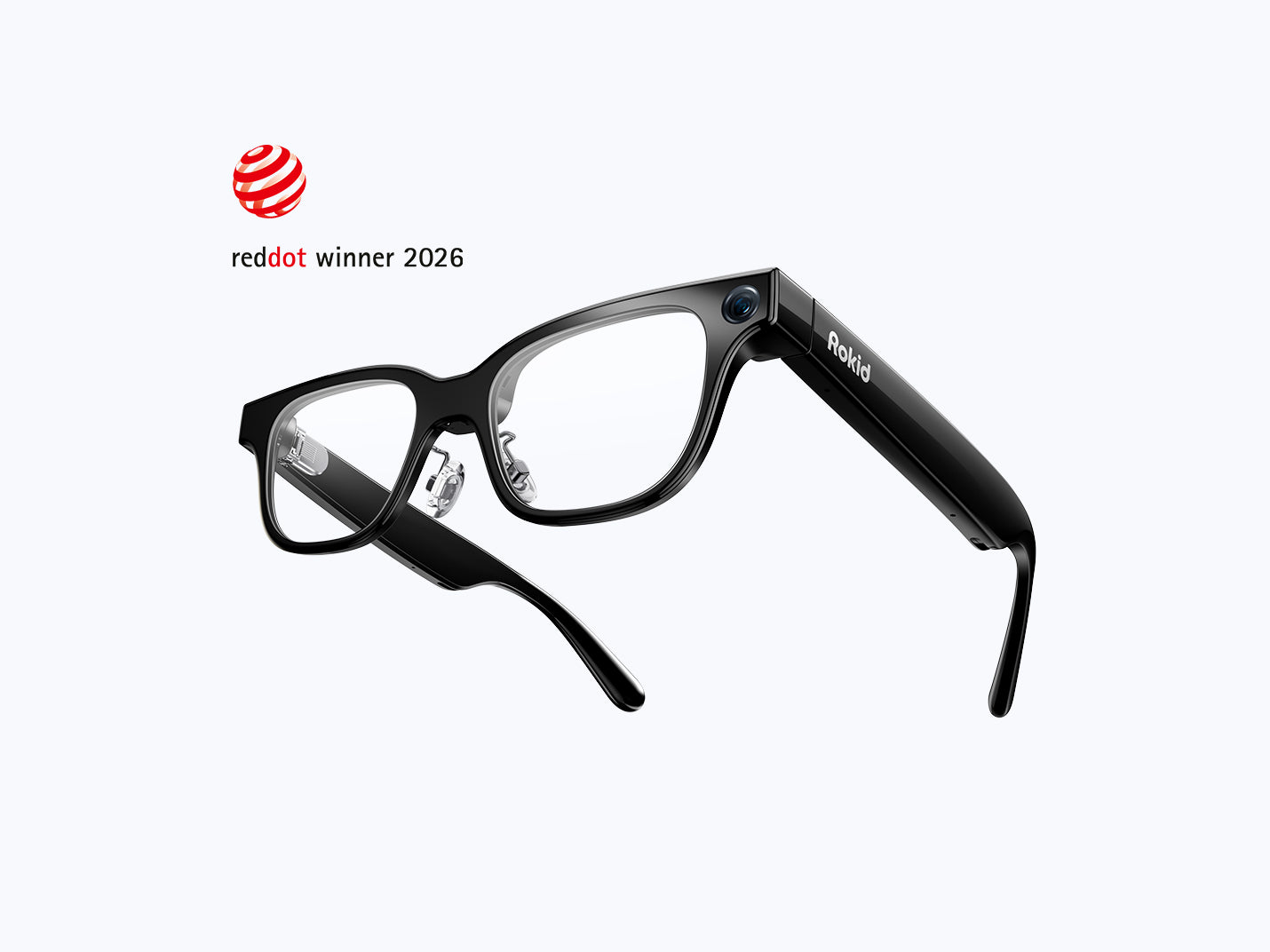
Most smart glasses with a camera skip the screen. The Ray-Ban Meta pair takes photos and answers questions through your ears only, because squeezing a display into a normal-looking pair of glasses is genuinely hard. Rokid Glasses did it anyway, and kept the whole thing at 49 grams. You get a small green screen in front of both eyes, a 12-megapixel camera on the temple, live translation in 89 languages and a voice assistant built on ChatGPT and Gemini, all in a frame that looks close enough to normal glasses to wear to work. They sell for $522 on Rokid’s own store right now, with Black Friday pricing running as we write this.
That price puts them above camera-only glasses and below full-blown AR headsets, which is exactly the spot this kind of product should sit. The question this review answers is simple: does the screen earn its place, or is it a party trick you stop using after a week?
What are Rokid Glasses?
Rokid Glasses are what the industry calls AI glasses with a display. Think of the two halves of the smart-glasses world: camera glasses like Ray-Ban Meta, which have no screen at all, and display glasses like the XREAL One or the Rokid Max 2, which show you a huge virtual screen but have no camera and no AI. Rokid built one pair with both halves: camera, speakers, microphones and AI assistant, plus a small see-through display.
The display part works with something called a waveguide. In plain terms, a tiny projector tucked inside the frame beams the picture through the lens, and a patterned layer etched into the glass bounces that light toward your eye. Done right, you see the image floating in front of you while the rest of your vision stays normal. Done badly, you get a dim, fuzzy ghost. Rokid’s version is a single green Micro-LED display, which is the honest way to keep a waveguide this thin and this bright.
What you actually see
Set expectations first: this is a green, single-color display, not a full-color screen. Resolution is 480 x 640 per eye, brightness runs up to 1,500 nits (nit is just the word for how bright a screen gets, and 1,500 is bright enough to read outdoors on a sunny day), and the viewable area covers a 30-degree field of view.
What that screen is for: teleprompter-style notes, turn-by-turn directions, live captions of what people say, meeting reminders and notifications, and AI answers you can glance at instead of pulling out your phone. It is a heads-up display, not a cinema. If you want to watch movies or play games on a giant virtual screen, that is the Max 2 or the XREAL One’s job, and both do it better than any waveguide pair can.
The AI assistant is the headliner
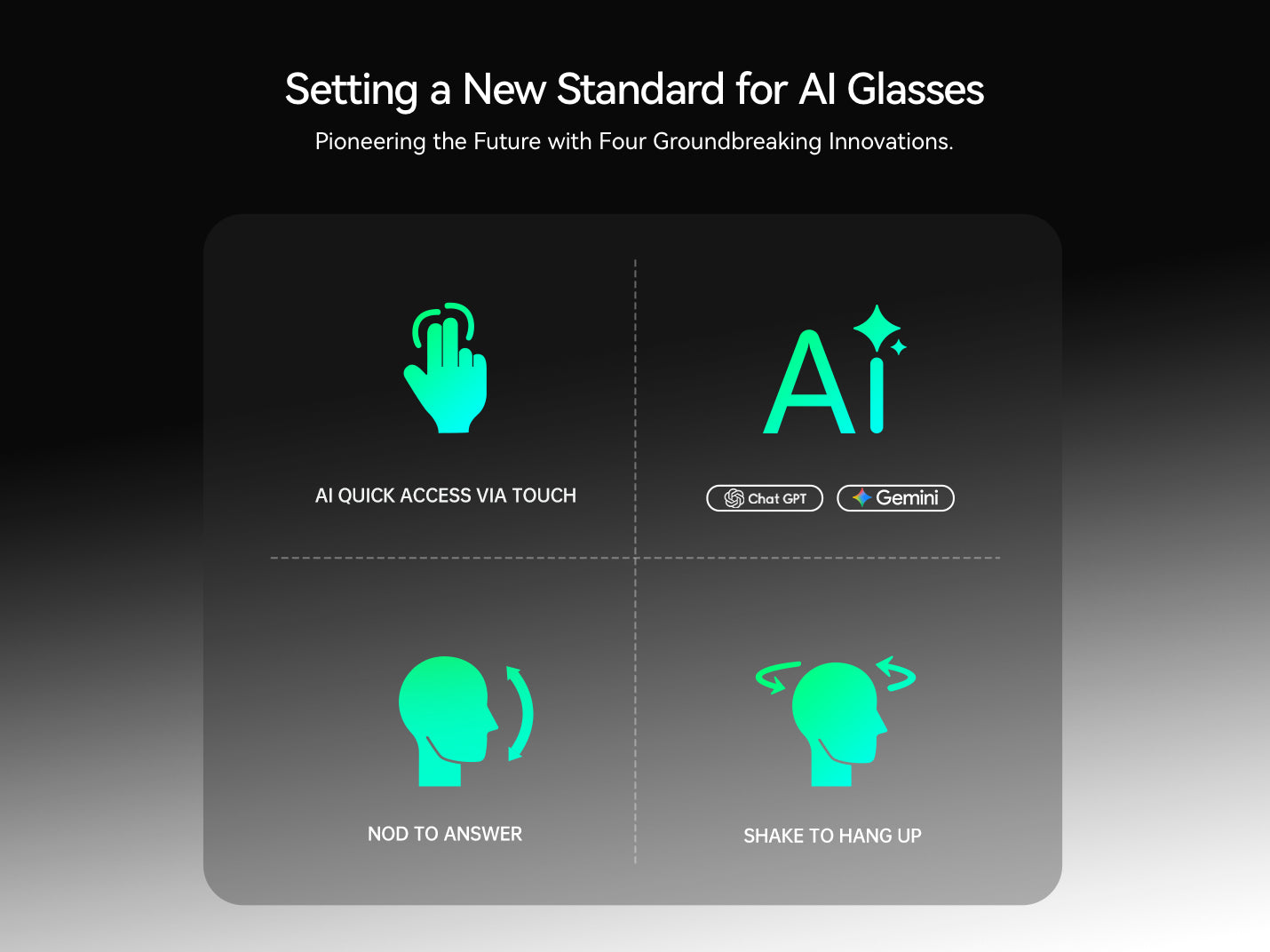
Say “Hi Rokid” and an assistant wakes up in your glasses. The unusual part is the stack behind it: Rokid runs both ChatGPT and Gemini, so you get two of the biggest AI models instead of being locked to one. Ask what something is, get quick answers, follow up with more questions. Controls go beyond voice: the frame supports nod to answer and shake to hang up gestures, plus touch taps on the temple for quick actions.
For work, the glasses handle voice-to-text notes, meeting transcription with speaker identification and automatic summaries. That is a real productivity pitch for anyone who sits in meetings all day and hates typing minutes afterward.
One honest flag from the spec sheet: full navigation access requires a subscription. The feature exists in the glasses, but check what the ongoing cost is before you count on turn-by-turn AR directions as a daily tool.
Live translation in 89 languages
Translation is the feature we would actually use every week. The glasses print live subtitles of the other person’s speech right in your view as they talk, supporting 89 languages. Ordering food in Rome or keeping up with a fast-talking in-law at Thanksgiving becomes a read-along instead of a guessing game.

The camera: 12MP from your point of view
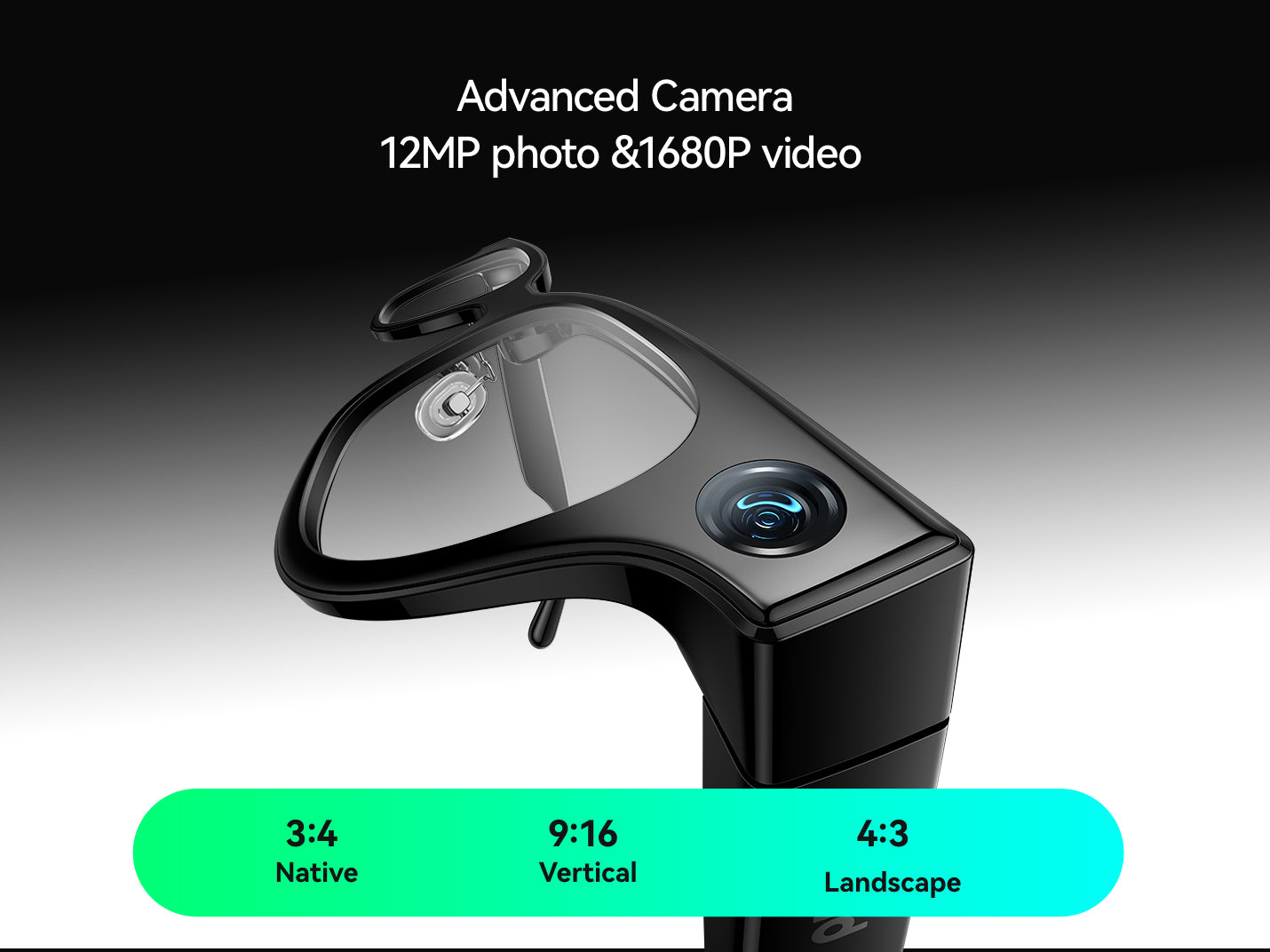
The camera is a 12-megapixel Sony IMX681 sensor with an F2.25 aperture and a 109-degree ultra-wide field of view, so it captures what you see, not what your arm reaches for. Photo resolution tops out at 3024 x 4032, video at 3K 30fps in vertical 9:16 or other formats, with smart HDR handling backlit and dim scenes. One spoken word or one press takes the shot.
Privacy is handled the standard way: a camera indicator lights when recording. That matters if you plan to wear these around other people’s kids, in stores, or anywhere people get twitchy about a lens at eye level.
Sound and calls
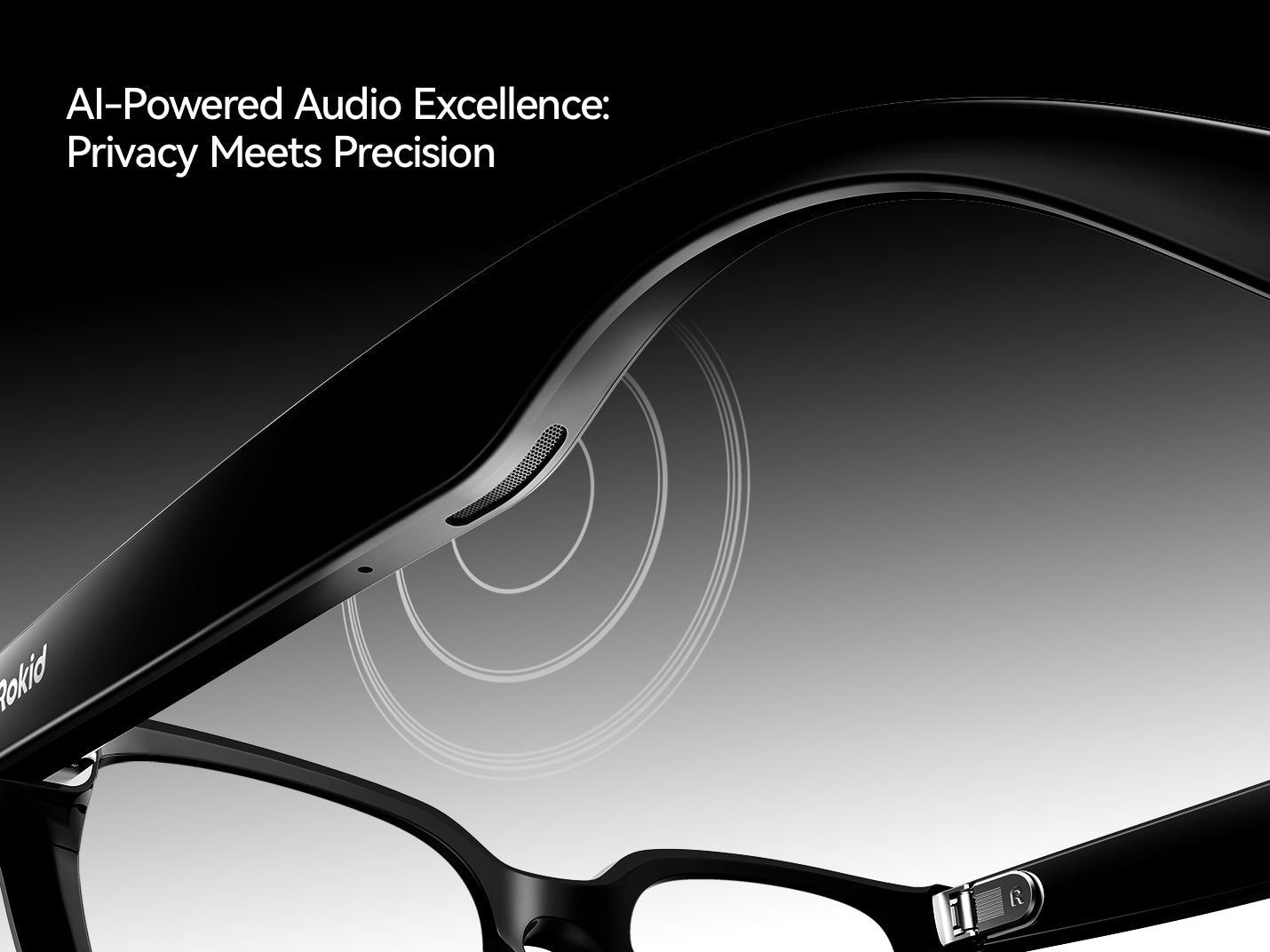
Audio comes from dual linear directional speakers, which means the sound is aimed at your ear canals instead of blasting outward, so the person next to you on the bus hears much less of your podcast. A 4-microphone array picks up your voice for calls and the AI assistant, and the whole thing carries an IPX4 rating, which means rain and sweat are fine but a swim is not.
Comfort, fit and prescription support
Weight is the whole game in this category, and 49 grams is genuinely light for a pair with a battery, chips and a camera inside. The frame is TR90 polymer with a titanium alloy hinge, air-cushion nose pads and a flexible hinge that adapts to different face shapes. The 4-mic array doubles as your call hardware.
Prescription coverage is the widest we have seen on smart glasses: +6.00 down to -16.00, through Rokid’s official lens service or the magnetic prescription frame accessory. Most competitors stop far short of -12, so strong prescriptions that get turned away elsewhere are welcome here.
Battery and charging
Here is the honest trade: the built-in battery is 210 mAh, which is small, because there was no room for anything bigger in a 49-gram frame. Expect a few hours of active use, not a full day of constant display time. Fast charging gets you to 80% in 20 minutes on the magnetic cable, and Rokid’s charging case accessory adds up to 10 full recharges on the go (the case is sold separately; the box includes a standard storage case, cable, cloth and extra nose pads). If you wear these all day, the case is not optional.
Rokid Glasses specs
- Weight: 49g
- Display: binocular Micro-LED waveguide, single green, 480 x 640, 30° FOV, 1,500 nits
- Camera: 12MP Sony IMX681, F2.25, 109° ultra-wide, up to 3K 30fps video, HDR
- Processor: Snapdragon AR1, 2GB RAM, 32GB storage
- Audio: dual directional speakers, 4-mic array, IPX4
- Connectivity: Wi-Fi 6, Bluetooth 5.3
- AI: “Hi Rokid” assistant on ChatGPT + Gemini, translation in 89 languages, meeting transcription, teleprompter, navigation (subscription for full access)
- Battery: 210mAh, 80% charge in 20 minutes, charging case adds up to 10 recharges (sold separately)
- Prescription: +6.00 to -16.00 via official lens service or magnetic Rx frame
Price: $522 on Rokid’s own store
The glasses list at $522.00 on Rokid’s official store right now, with Black Friday pricing running at the time of writing. That buys the full kit in the box: glasses, storage case, magnetic charging cable, cleaning cloth, interchangeable nose pads and the manual. Rokid backs it with a 1-year limited warranty, a 30-day return window (unused and complete, with return shipping on non-defective returns handled by the buyer) and free standard US shipping on orders over $60. Add-on accessories worth knowing: clip-on sunglasses for the display pair at $39, and the charging case for all-day battery.
For context, camera-only pairs like Ray-Ban Meta sit well under this price, and cinema-style AR glasses like the XREAL One cost similar money for a much bigger screen but no camera or AI. Rokid is charging for being the only pair that does all three jobs at once, in a frame you can wear all day.
Who should skip these
Skip the Rokid Glasses if you want a big screen for movies and gaming: the Max 2 at $259 or the XREAL One deliver a far better picture for less or similar money. Skip them if you only want photos and voice AI and no screen at all, because camera-only glasses cost much less. And skip them if you need true full-color AR overlays, since this display is green by design.
Verdict: the first do-everything pair that mostly earns it
Rokid Glasses are the most complete pair in their price range: camera, AI, translation, teleprompter and a working display in 49 grams, with the best prescription support on the market. The green screen will not replace your TV and the battery will not survive a heavy day without the charging case, but neither complaint touches the reason to buy: this is the one pair you can wear from a morning commute to a meeting to a dinner abroad and never take off. If you have been waiting for smart glasses that actually do everything, they are $522 on Rokid’s store and, at the moment, on sale.
Rokid Glasses FAQ
Do Rokid Glasses work with prescription lenses? Yes, from +6.00 to -16.00, through Rokid’s official lens service or the magnetic prescription frame, the widest range we have seen on smart glasses.
Does the navigation feature cost extra? Full navigation access requires a subscription. The glasses support it out of the box, but check the ongoing plan cost before relying on it daily.
Can Rokid Glasses take photos and videos? Yes, a 12MP Sony sensor shoots 3024 x 4032 photos and up to 3K 30fps video hands-free, and an indicator light shows when recording.
How long does the battery last? The built-in 210mAh battery covers a few hours of active use, charges to 80% in 20 minutes, and Rokid’s charging case accessory adds up to 10 full recharges.
What comes in the box? The glasses, a storage case, magnetic charging cable, cleaning cloth, interchangeable nose pads and the user manual.
More in this topic: Best AR Glasses in 2026: The Honest List, Rokid Max 2 Review, Even Realities G2 vs XREAL One