Disclosure: arvrguide.com may earn a commission if you buy through links on this page, at no extra cost to you. We only recommend gear we’d buy with our own money.
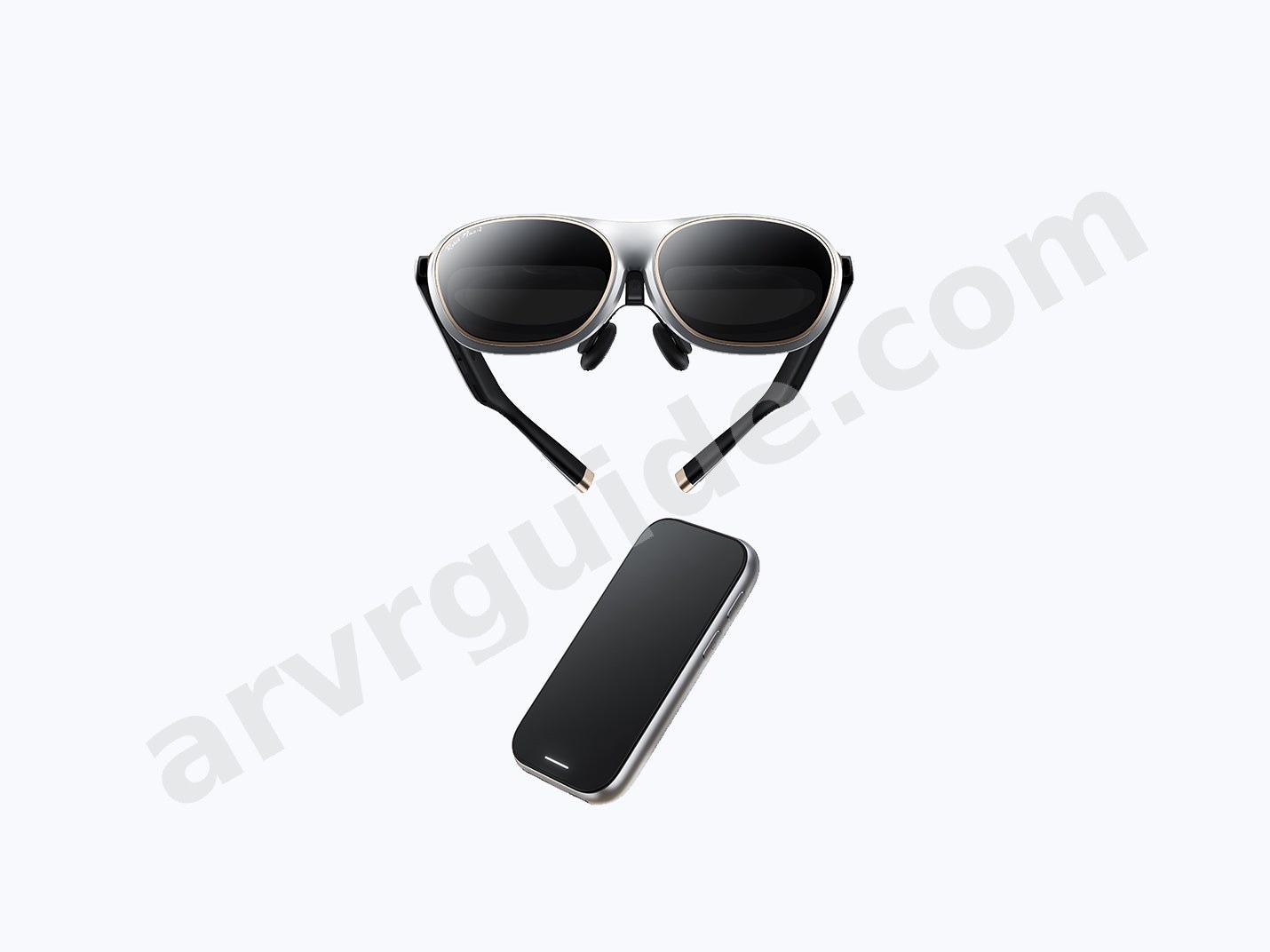
The name Rokid AR Spatial sounds like a single pair of glasses, but it is a bundle: Rokid’s Max 2 AR glasses plus the Station 2, the palm-sized Android hub that powers them. Buy them separately and you pay $558. Bundled, AR Spatial costs $429, and what you get is a virtual screen Rokid sizes at up to 300 inches, running on its own battery, with no phone required.
Check the current Rokid AR Spatial price on the Rokid store
What is actually in the box
Two devices. The Max 2 glasses are the display: two Micro-OLED screens behind dark lenses, with speakers and the built-in prescription dials, but no battery and no computer inside. The Station 2 is the computer: a puck about the size of a small phone with its own screen face, a touch trackpad and a 5,000mAh battery. The glasses work plugged straight into a phone with USB-C video output, but the Station is what makes the system standalone, and that is what this bundle is really buying.
The 300-inch screen
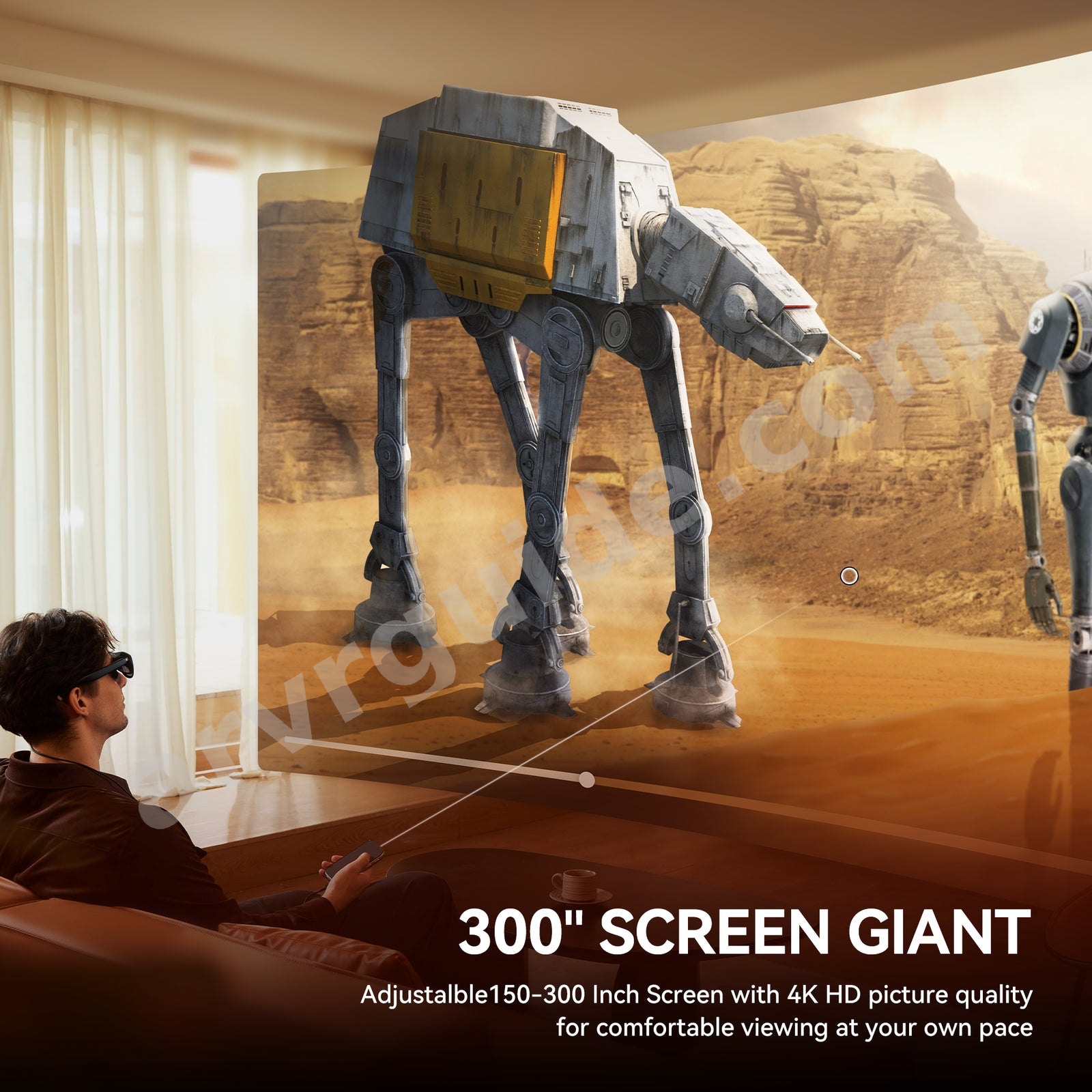
Rokid markets the virtual display as a 300-inch screen, adjustable down to 150 inches depending on how far you want the image to sit. In practice this is your hotel-room TV, your second monitor and your movie theater, all in the same pair of glasses. The system also floats up to three app windows side by side, so you can keep a browser, a document and a video open at once, turning your head to look between them.
The Station 2 does the computing
The hub carries 8GB of RAM and 128GB of storage, with Wi-Fi 6 and Bluetooth 5.2, running Rokid’s YodaOS-Master, an Android-based spatial system. The 5,000mAh battery charges at 18W, and the dual USB-C ports mean you can charge the Station while you are using it. Bluetooth keyboard and mouse pair directly, which turns the whole rig into a surprisingly usable portable office.
Built-in myopia dials and eye comfort
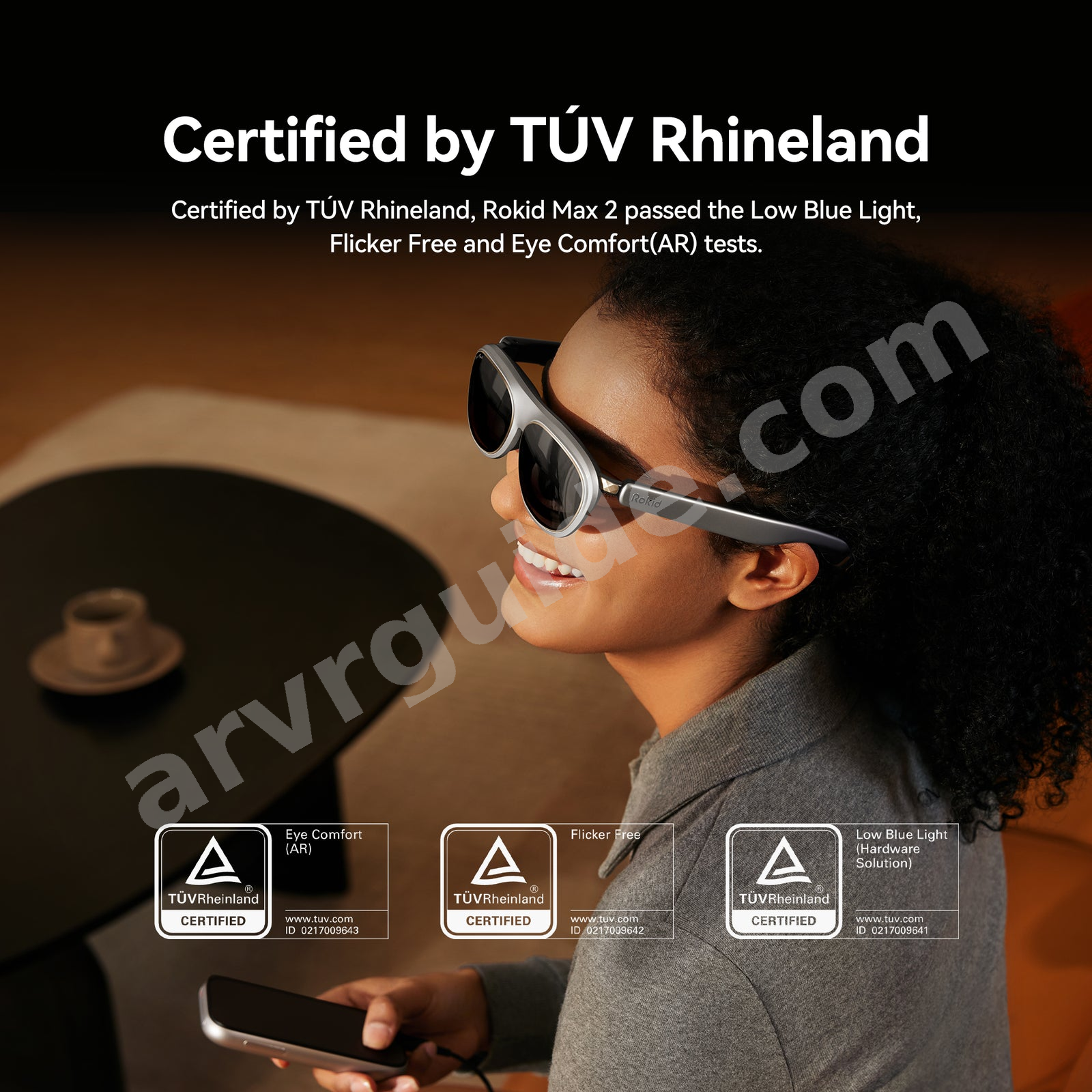
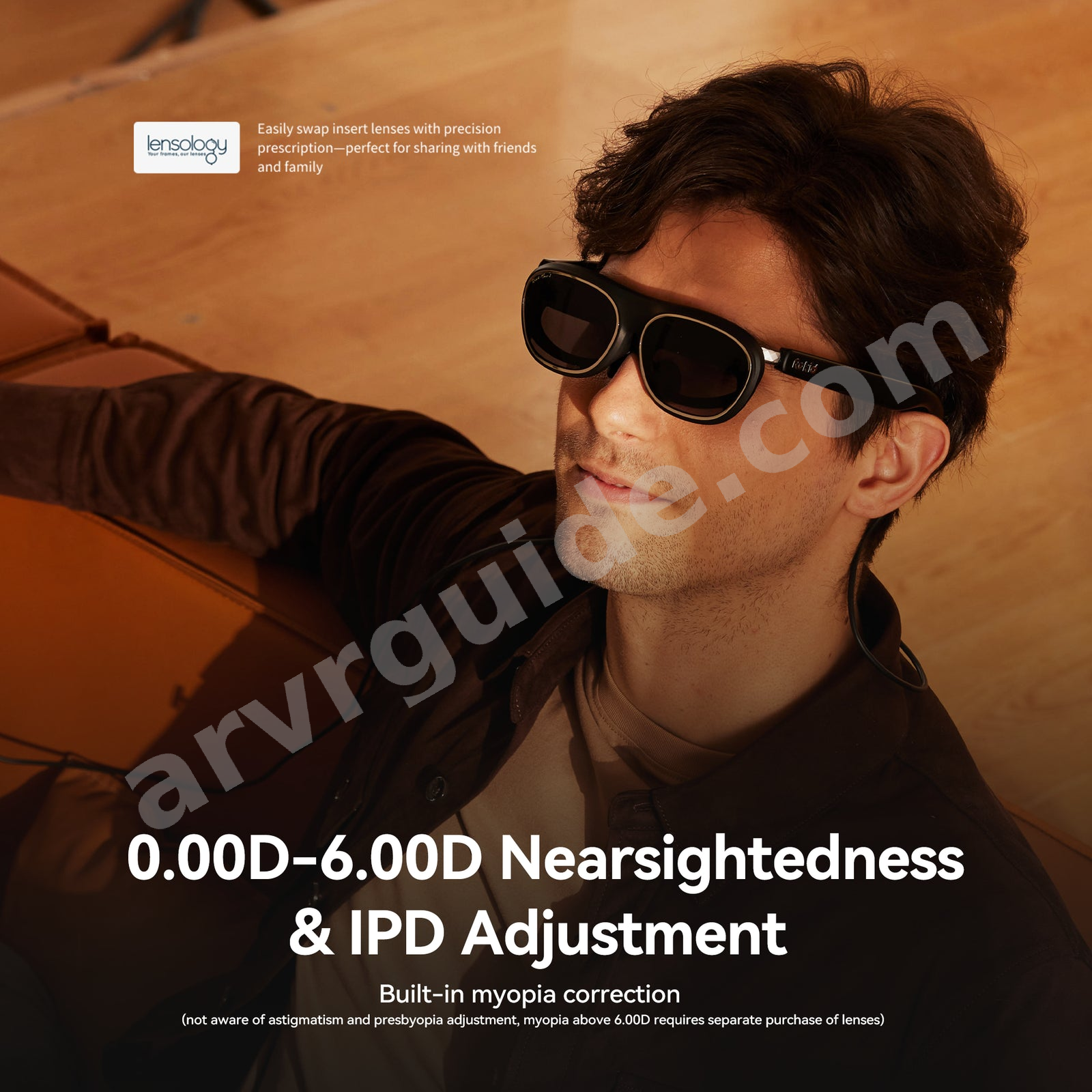
The Max 2 glasses carry Rokid’s dial-based vision adjustment: 0.00D to -6.00D of built-in myopia correction plus pupillary distance adjustment, so most nearsighted wearers can use them without separate prescription inserts. Above -6.00D you need separate prescription lenses. Rokid Max 2 is also certified by TUV Rheinland for low blue light, flicker-free and eye comfort (AR), which matters if you plan long sessions.
What real owners say
The bundle had 34 reviews on Rokid’s own store at review time, 62 percent of them five stars. The honest signals worth weighing: one buyer found the glasses-only version useless because neither his phone nor his tablet supported USB-C video output, and it only worked once he bought the station version. A Max 2 owner who tried earlier Rokid pairs reports the old edge-blur and earpiece-pressure complaints were fixed in Max 2. Translation: check your phone’s video output before buying glasses-only, and expect the bundle to be the version that just works.
Who should skip it
If your phone supports USB-C DisplayPort output and you only want a big screen at your desk, the glasses-only Max 2 route is cheaper and does the same display job. The bundle earns its price when you want the system untethered: couch, hotel, plane, backyard, anywhere your phone is not welcome as the computer.
Should you buy the Rokid AR Spatial?
At $429 it is the cheapest door into the full standalone Rokid system, and it saves $129 against buying the glasses and hub separately. If you have read this far, that math is probably the argument. Check AR Spatial’s price on the Rokid store.
More in this topic: Rokid Max 2 Review, Rokid Station 2 Review, Rokid AI Glasses Style Review, Rokid Glasses Review and Best AR Glasses in 2026: The Honest List.