Disclosure: arvrguide.com may earn a commission if you buy through links on this page, at no extra cost to you. We only recommend gear we’d buy with our own money.
The Rokid Max 2 and the XREAL One are the two display glasses everybody shortlists, and they make the comparison easy on purpose: the screens inside are nearly the same, and everything else is where the two companies disagree. Rokid sells you the screen for $259 and lets you add a computer later. XREAL builds the computer into the frame and charges $399 for it. One hundred and forty dollars buys a philosophy, and here is which one fits you.
Where to buy: the Rokid Max 2 on Rokid’s store ($259) or the XREAL One on XREAL’s store ($399)
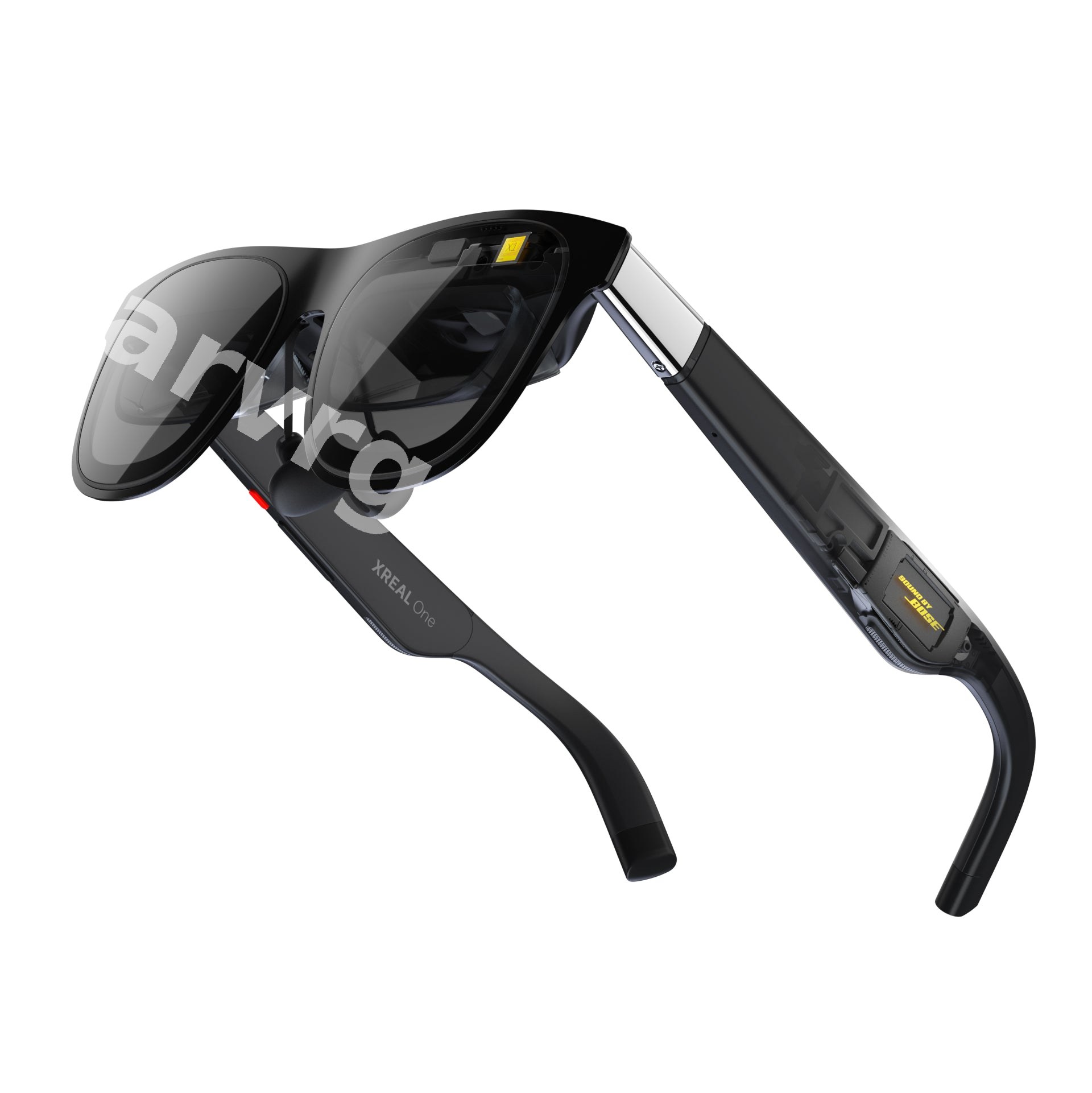
What is identical
Start with what you are not paying extra for, because it is most of the picture. Both use a 1080p micro-OLED panel per eye, both refresh at 120Hz, both claim a 50-degree field of view, both weigh in the mid-70s to mid-80s of grams, and both are tethered: they plug into your phone, laptop, tablet, Switch or Steam Deck over USB-C and show that device’s picture as a huge private screen. Day to day, the picture you see through either pair is closer than the price gap suggests. The $140 difference buys other things.
The spec sheet, side by side
The quick-pick chart:
| Rokid Max 2 | XREAL One | |
|---|---|---|
| Price | $259 | $399 |
| Resolution per eye | 1080p micro-OLED | 1080p micro-OLED |
| Refresh rate | 120Hz | 120Hz |
| Field of view | 50 degrees | 50 degrees |
| Claimed screen size | 215 inches | 147 inches |
| Weight | 75g | 84g |
| Spatial anchoring | Needs the Station 2 hub | Built-in X1 chip, works out of the box |
| Prescription fix | Dials on the frame, 0.00D to -6.00D | Frame included, $49.90 inserts extra |
| Audio | Standard open-ear speakers | Sound by Bose |
| Dimming | Clip-on shade | Electrochromic, adjustable from the frame |
Two rows deserve a honesty note. The claimed screen sizes, 215 inches versus 147, come from the makers measuring differently, so treat them as marketing rather than a real gap. Same with brightness: Rokid claims 3,000 nits on the panel and XREAL rates the One at 600 nits, but panel brightness and what reaches your eye are not the same number, and no brand measures the way its rival does.
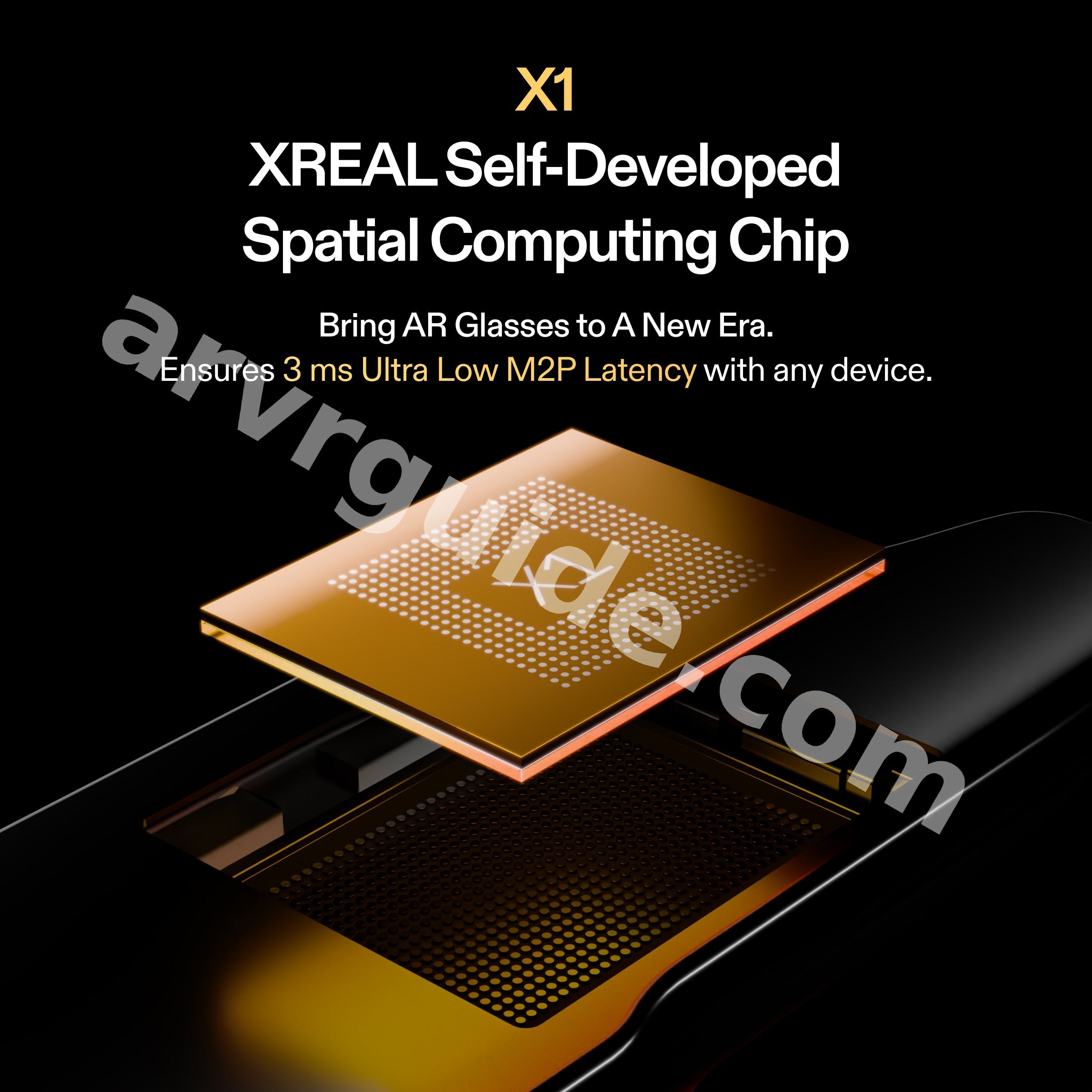
The big difference: where the computer lives
The X1 chip is the XREAL One’s whole argument. It tracks your head and pins the virtual screen in space, so the display stays put while you look around, with no extra box and no phone software. The Max 2 cannot do that on its own; the screen simply follows your head, the way a monitor bolted to your face would. Rokid’s answer is the Station 2 hub, which adds the anchoring plus three floating app windows, and that is where the math turns: the Max 2 plus Station 2 runs $429 as a bundle against the XREAL One’s $399 all-in. If anchored windows are what you want, XREAL is the cheaper door into them.
If you wear a prescription, read this row twice
The Max 2 has a physical dial above each lens. Twist it and the optics move until the picture is sharp, covering 0.00D to -6.00D, no inserts, no waiting, no extra cost. The XREAL One ships with a prescription frame that holds nothing: you buy lens inserts separately ($49.90) and wait for them. For nearsighted buyers this is the single biggest practical difference in the whole comparison, and it is why our Rokid Max 2 review called the dials the headline feature.
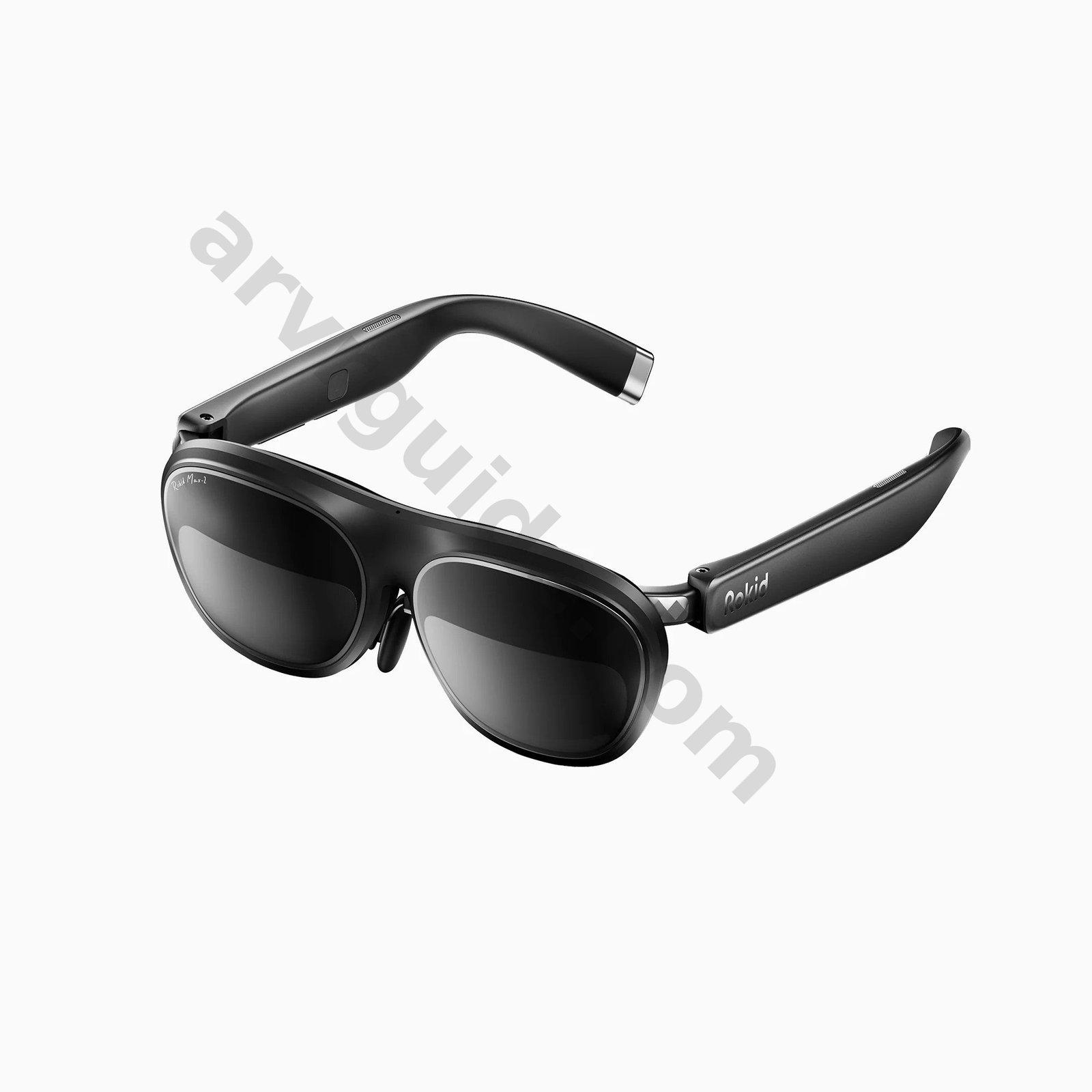
The smaller differences that still matter
XREAL’s speakers are tuned with Bose and sound noticeably better in movie use. Its dimming is electronic, a slider that darkens the lenses without touching a clip-on. Rokid’s answer to brightness is a snap-on shade, which works but lives in a pocket when you do not need it. Rokid wins the weight fight by nine grams and the price fight by a hundred and forty dollars, and its glasses are also the cheaper one to lose or scratch at $259.
The verdict
If you are nearsighted, the Max 2 wins on the spot: the dials are free and instant where the XREAL route costs money and a week, and you save $140 doing it. If you have no prescription and want the screen to stay anchored in the air, the XREAL One is the better machine out of the box, and it is cheaper than building the same ability onto the Max 2 with a hub. Both are good pairs; the prescription row and the X1 chip are the whole decision.
More in this topic: Rokid Max 2 Review, Rokid AR Glasses: Every Model and Price, Rokid AR Spatial Review and Best AR Glasses in 2026: The Honest List.